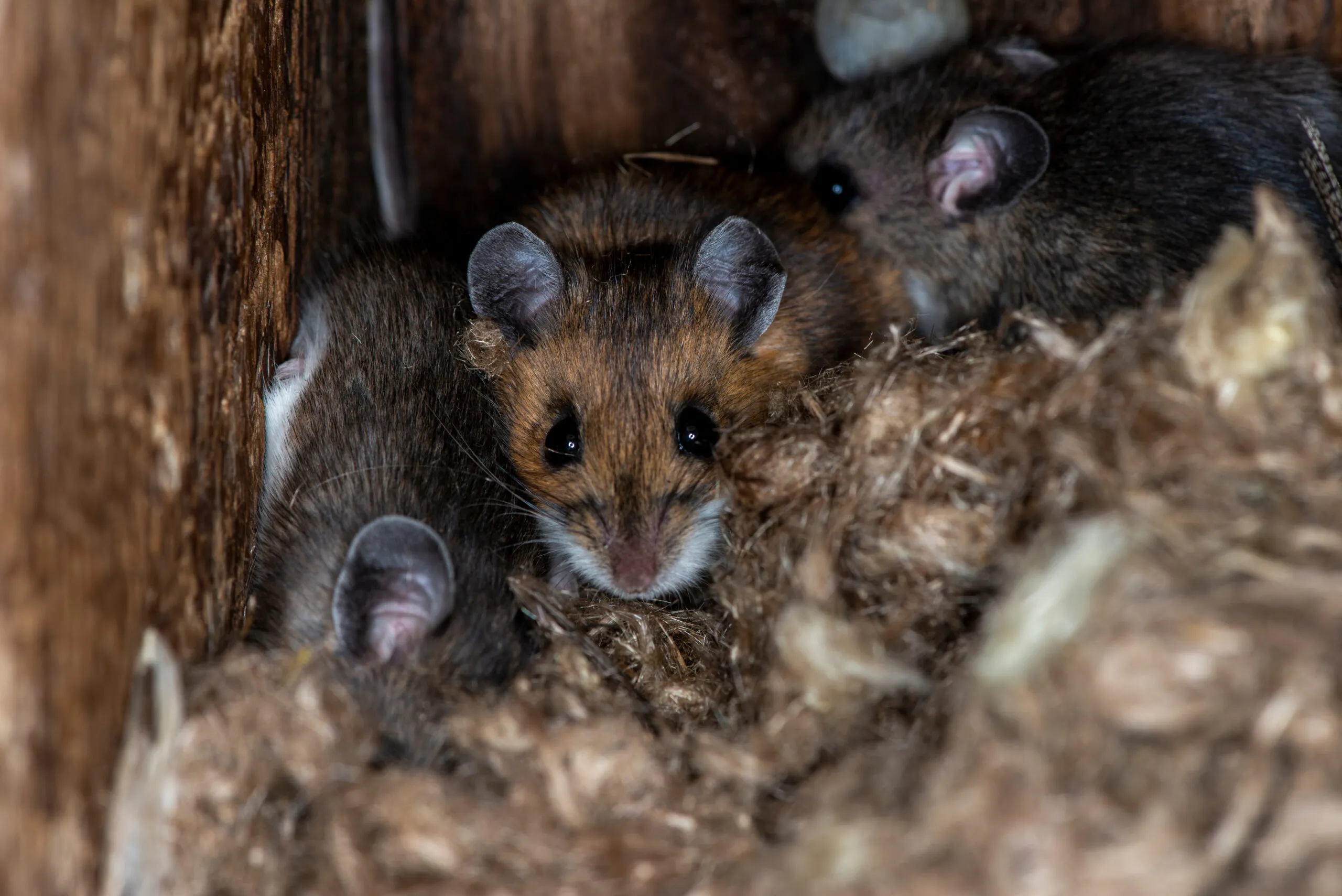
Rats and mice often appear in the same neighborhoods, yet they do not live peacefully together. If you have heard nocturnal noises in your walls, ceiling, or attic, you may be dealing with more than one species of rodent-and the relationship between them is far more hostile than most homeowners realize.
Rats are not just competitors with mice. They are predators. Understanding this dynamic is key to effective rodent control in South Florida.
Do Rats and Mice Coexist?
The short answer is no-not peacefully. When rats and mice occupy the same structure, it is not a case of two species sharing space. It is a competition, and the rats almost always win.
Nocturnal noises in walls may indicate both species are present, but the situation is rarely stable. Rats are territorial and will actively hunt mice when they share the same environment. This behavior, known as muricide, is well-documented in pest biology. Rats view mice not only as competitors for food and shelter but as prey.
If you have signs of both rats and mice, the infestation is likely more advanced than it appears on the surface.
Understanding Why Rats Hunt Mice
Rats are opportunistic predators, and several factors drive them to hunt mice:
- Food scarcity. When food sources are limited, rats will turn to mice as a protein source. This is especially common in homes where food has been sealed away and traditional scavenging options are reduced.
- Seasonal changes. During the cooler months in South Florida, competition for indoor resources intensifies. As both rats and mice move indoors seeking warmth and food, the aggression between species increases significantly.
- Territory protection. Rats are highly territorial. They do not tolerate mice in their domain. A dominant rat colony will systematically eliminate mice from shared spaces to protect their nesting sites and food supply.
How to Tell Rats and Mice Apart
Knowing which rodent you are dealing with is the first step toward effective control. Here are the key differences:
- Size. Rats are significantly larger than mice. An adult Norway rat can weigh up to a pound and measure 16 inches from nose to tail. Mice are much smaller, typically only 3 to 4 inches in body length.
- Droppings. Rat droppings are larger and capsule-shaped, roughly 3/4 inch long. Mouse droppings are smaller, pointed at both ends, and about 1/4 inch long. Droppings are one of the most reliable indicators of which species is present.
- Entry gaps. Mice can fit through holes as small as a dime-about 1/4 inch in diameter. Rats need slightly larger openings, roughly the size of a quarter, but they can gnaw smaller holes to the size they need.
- Behavior. Mice are naturally curious and will investigate new objects in their environment, including traps. Rats are cautious and neophobic, often avoiding new objects for days before approaching them. This behavioral difference has major implications for trapping strategies.
Why Mixed Infestations Require Fast Action
A mixed rodent infestation-one involving both rats and mice-creates compounding problems that escalate quickly:
- Chewing damage to wires, insulation, and plumbing. Both rats and mice gnaw constantly to keep their teeth from overgrowing. Damaged electrical wiring creates fire hazards, while chewed plumbing can cause leaks and water damage.
- Contamination of food and living surfaces. Rodents contaminate everything they touch with urine, droppings, and body oils. Kitchens, pantries, and storage areas are especially vulnerable.
- Health risks. Rodents are vectors for serious diseases including Hantavirus, Salmonella, and Leptospirosis. A mixed infestation doubles the contamination risk and the potential for exposure.
Entry Points That Attract Both
Rats and mice enter homes through many of the same vulnerabilities. Common entry points include:
- Gaps under doors. Even small gaps beneath exterior doors can allow mice to squeeze through, and rats will gnaw the gap wider if needed.
- Foundation cracks. Settling, weather damage, and age can create cracks in your foundation that rodents exploit.
- Damaged siding or stucco. South Florida homes with stucco exteriors are particularly vulnerable to cracks and gaps that develop over time.
- Open or unscreened vents. Attic vents, soffit vents, and crawl space vents without proper screening are open invitations for rodents.
- Pipe openings and utility line gaps. Where plumbing, electrical, and HVAC lines enter the building, there are often gaps that were never properly sealed.
Why Professional Rodent Control Matters
Dealing with a mixed rat and mouse infestation requires more than setting a few traps. Professional rodent control matters because:
- Rats adapt to traps quickly. Because rats are neophobic, they require species-specific strategies. A trap that works for mice will often be ignored or avoided by rats. Professional pest control technicians use different trap types, placements, and baiting techniques for each species.
- Proper identification determines the right approach. Treating a rat problem with mouse-focused methods-or vice versa-wastes time and allows the infestation to grow. A professional inspection identifies which species are present and develops a targeted plan accordingly.
Prevention Tips for Homes
While professional control is essential for active infestations, homeowners can take steps to make their property less attractive to both rats and mice:
- Keep kitchens clean and food sealed. Wipe down counters, sweep floors, and store all food-including pet food-in sealed containers.
- Use airtight containers for storage. Cardboard boxes and plastic bags are no match for rodent teeth. Use hard-sided, airtight bins for pantry items and garage storage.
- Reduce clutter in garages and storage areas. Clutter provides nesting material and hiding spots. Keep storage areas organized and elevated off the floor.
- Trim vegetation away from the home. Overgrown shrubs, tree branches touching the roof, and dense ground cover near the foundation all provide cover and pathways for rodents.
- Fix plumbing leaks that provide water sources. Even small drips under sinks or from outdoor faucets provide the water rodents need to survive. Repair leaks promptly.
Professional Rat and Mouse Control from Bugstinct
Bugstinct provides comprehensive rodent control services across Miami-Dade County, including Miami, Miami Beach, Hialeah, Doral, Aventura, and surrounding areas. Our team is trained to identify and treat both rat and mouse infestations using species-specific strategies that deliver lasting results.
From thorough inspections and targeted trapping to professional-grade exclusion, we address every aspect of your rodent problem. If you suspect rats, mice, or both are in your home, contact Bugstinct today to schedule your inspection.