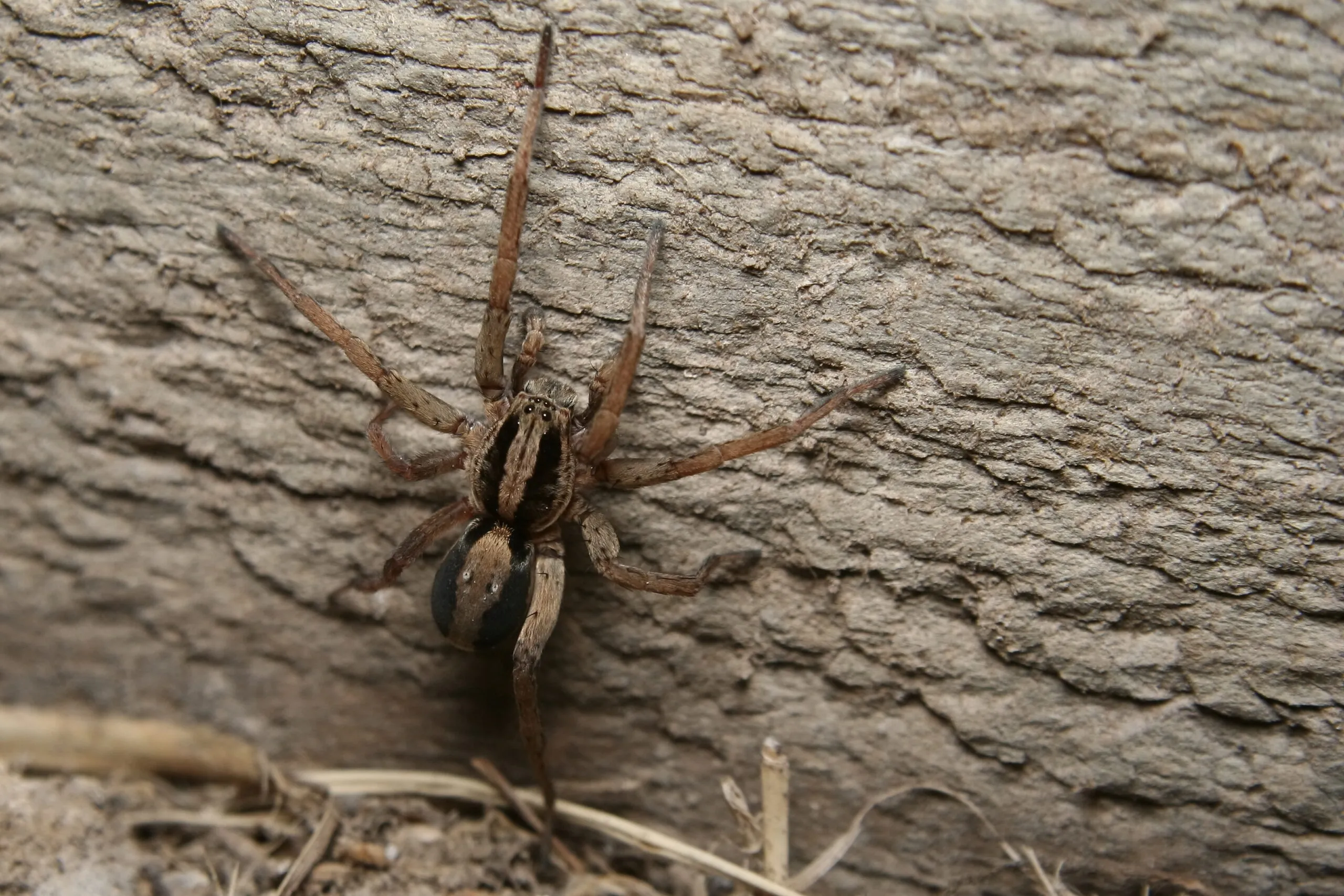
Grass spiders and wolf spiders are two of the most commonly encountered spiders in Miami-Dade County. Both are brown, both are ground-dwelling, and both can startle homeowners when they show up unexpectedly in the yard or inside the house.
But despite their similar appearance at first glance, these two species are quite different in how they hunt, where they live, and what their presence means for your home. Here is how to tell them apart.
Wolf Spider Identification
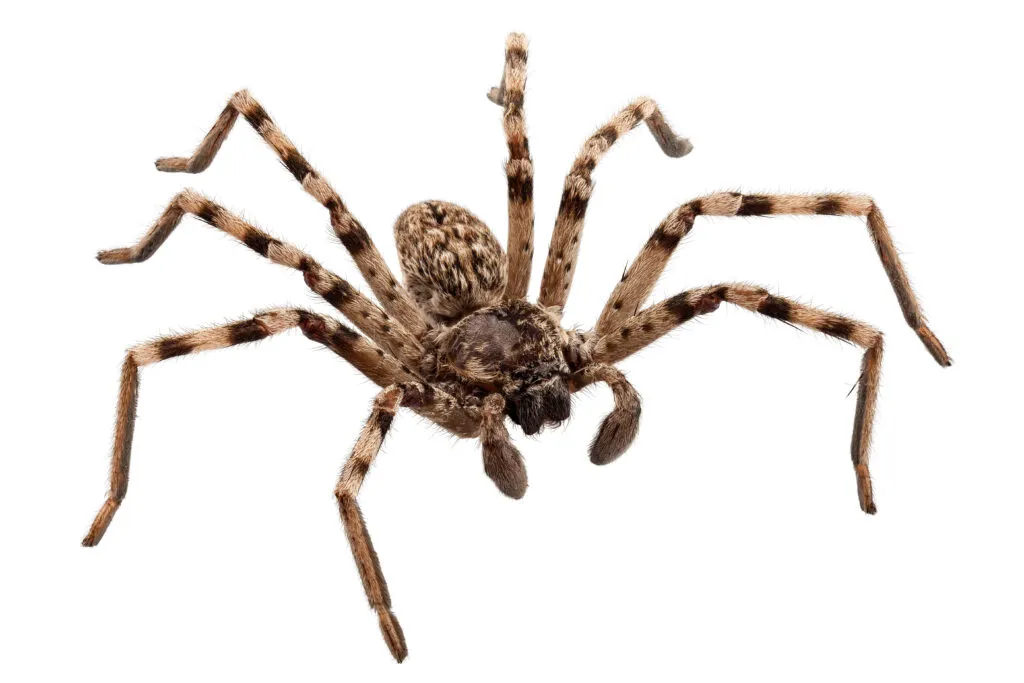
Wolf spiders are among the most recognizable spiders in South Florida due to their size and speed.
- Body. Large and robust, with a brown or gray coloring and darker markings. Females can reach over an inch in body length, with a leg span of up to three inches.
- Eyes. Wolf spiders have eight eyes arranged in three distinctive rows: four small eyes on the bottom, two large forward-facing eyes in the middle, and two medium eyes on top. This eye arrangement gives them excellent vision for hunting.
- Hunting style. Unlike web-building spiders, wolf spiders hunt by speed. They chase down prey on the ground, relying on their powerful legs and keen eyesight.
- Night identification. Wolf spider eyes reflect light, producing a noticeable "eye shine" when a flashlight is pointed at the ground at night. This is one of the easiest ways to spot them in your yard.
Grass Spider Identification
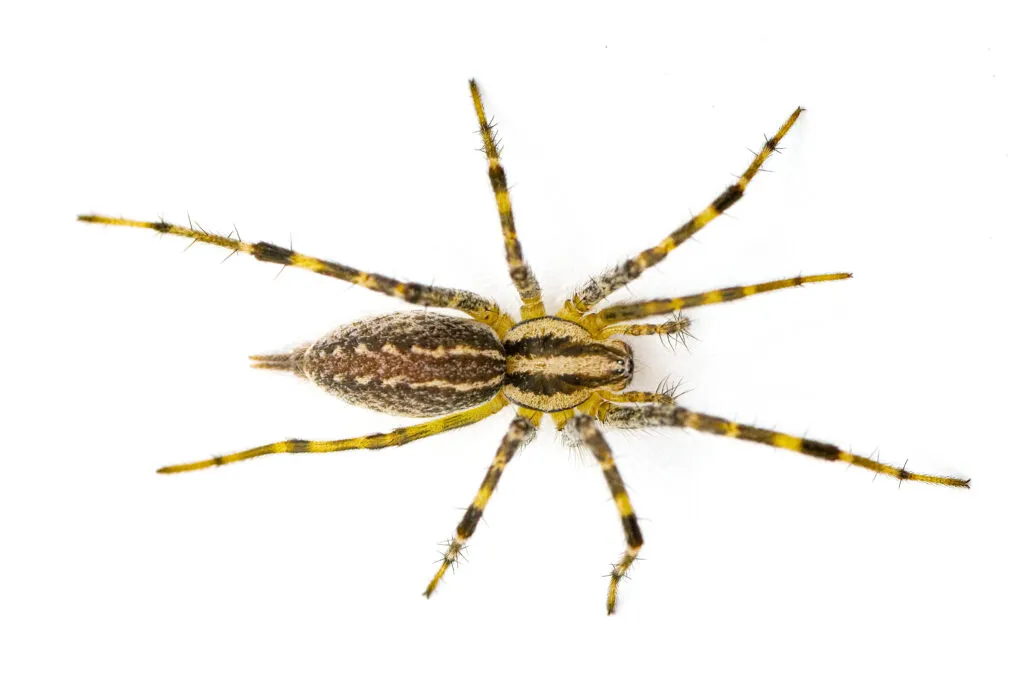
Grass spiders are smaller and more subtle than wolf spiders, but they are equally common in South Florida landscapes.
- Body. Brown or tan body with two dark longitudinal stripes running along the back (cephalothorax). They are slimmer and more delicate in build compared to wolf spiders.
- Spinnerets. Grass spiders have notably long spinnerets-the silk-producing organs at the rear of the abdomen. These extended spinnerets are one of the most reliable identification features.
- Web style. Grass spiders build distinctive funnel-shaped webs in grass, shrubs, and ground cover. The web is a flat, sheet-like structure with a funnel-shaped retreat at one end where the spider waits for prey to land on the sheet.
Web-Building vs. Hunting
The fundamental difference between these two species is how they catch their food, and this is the easiest way to distinguish them:
- Grass spiders sit at the back of funnel webs waiting for prey to land. When an insect touches the sheet web, vibrations alert the spider, which rushes out from its funnel retreat to grab the prey. They are ambush predators that rely entirely on their webs.
- Wolf spiders actively stalk and chase down prey. They do not build webs for catching food. Instead, they patrol the ground-often at night-hunting insects by sight and speed. If you see a large spider running across your patio, it is almost certainly a wolf spider.
This behavioral difference is the most reliable way to tell the two apart. A spider sitting in a funnel web is a grass spider. A spider running freely on the ground is a wolf spider.
Where You'll Find Them in Miami-Dade
Both species are common throughout Miami-Dade County, but they prefer different microhabitats:
- Grass spiders are typically found along lawn edges, in hedges and shrubs, in ground cover and garden beds, and in window wells. Their funnel webs are often visible in the morning dew, making them easier to spot in the early hours.
- Wolf spiders are commonly found on patios and pool decks, in garages and storage areas, along exterior walls at night, and occasionally inside the home. They are attracted to outdoor lighting because lights draw the insects they hunt.
Diet Comparison
Both species are beneficial predators that help control nuisance insect populations, but they target different prey due to their different hunting methods:
- Wolf spiders eat crickets, roaches, beetles, and other ground-dwelling insects. They are especially effective at controlling cockroach populations around the exterior of homes.
- Grass spiders eat mosquitoes, gnats, flies, moths, and other flying insects that get caught in their sheet webs. Their webs are particularly effective at trapping small flying insects near ground level.
Are They Dangerous?
This is the question most homeowners want answered, and the news is reassuring:
- Both species are technically venomous - virtually all spiders are - but neither is medically significant to humans. Their venom is designed to subdue small insects, not large mammals.
- Bites from either species are rare and mild. In the uncommon event of a bite, symptoms are limited to minor redness and brief swelling at the bite site, similar to a mosquito bite. Pain is minimal and resolves quickly.
- Neither poses a serious health threat to humans or pets. These spiders are not aggressive toward people and will only bite if directly handled or accidentally trapped against skin.
Behavior Differences
Beyond hunting methods, these spiders differ in several behavioral ways:
- Wolf spiders are fast, bold hunters that carry their egg sacs attached to their spinnerets. When the eggs hatch, the spiderlings ride on the mother's back until they are large enough to disperse. Seeing a wolf spider covered in tiny spiders on its back is one of the more memorable pest encounters homeowners report.
- Grass spiders are shy and sedentary. They spend most of their time hidden in the funnel retreat of their web and will quickly retreat deeper into the funnel when disturbed. They rarely leave their webs voluntarily and are much less likely to be seen moving around the home.
When Spiders Become a Problem
While both grass spiders and wolf spiders are beneficial, there are situations where their presence indicates a larger issue or becomes a nuisance:
- Grass spider webs accumulating across landscaping. A large number of funnel webs covering your lawn, hedges, or window wells can be unsightly and may indicate a high insect population that is supporting the spider colony.
- Wolf spiders appearing frequently inside the home. The occasional wolf spider indoors is normal, but frequent sightings inside suggest entry points that other pests may also be using.
- Either species in bedrooms or living spaces. Spiders inside living areas are often a sign of a larger pest issue. Spiders go where the food is-if they are coming inside, it means insects are already there.
Bugstinct Spider Control in Miami-Dade
Whether you are dealing with funnel webs across your landscaping or wolf spiders showing up inside your home, Bugstinct provides effective spider control throughout Miami-Dade County.
Our services include thorough web removal, targeted indoor and outdoor treatments, and prevention strategies designed to reduce the prey insects that attract spiders in the first place. By addressing the root cause-not just the spiders themselves-we deliver lasting results.
Contact Bugstinct today to schedule your spider inspection and keep your Miami-Dade home comfortable and spider-free.