Pest Control Terms Glossary -- Every Term South Florida Homeowners Encounter
This glossary defines every pest control term commonly used by South Florida pest control companies, in service agreements, and in technician explanations. Definitions are written for homeowners, not industry professionals -- plain language, with South Florida context where local conditions change how a term applies.
- Treatment product and method terminology defined
- Pest species names and identifiers for South Florida
- Service and guarantee terms clarified
- IPM and pest management program terminology
Pest Control Terminology -- Why These Definitions Matter
Most pest control companies use technical terminology without explaining what it means. Homeowners who understand what 'non-repellent gel bait,' 'IGR,' 'residual treatment,' and 'harborage zone' mean can verify that the treatment they are receiving is actually appropriate for the pest they have. Those who do not understand the terms cannot evaluate whether the technician is using the right protocol.
This matters most in South Florida because the region's pest species -- particularly German cockroaches -- require very specific treatment protocols that differ significantly from what generic pest control companies offer. A company applying repellent spray to German roaches is using the wrong product. A homeowner who knows what gel bait is and why it is required can ask the right question before the technician applies anything.
Definitions below are organized alphabetically within four categories: Treatment Methods, Pest Species, Service Terms, and Program Terminology.
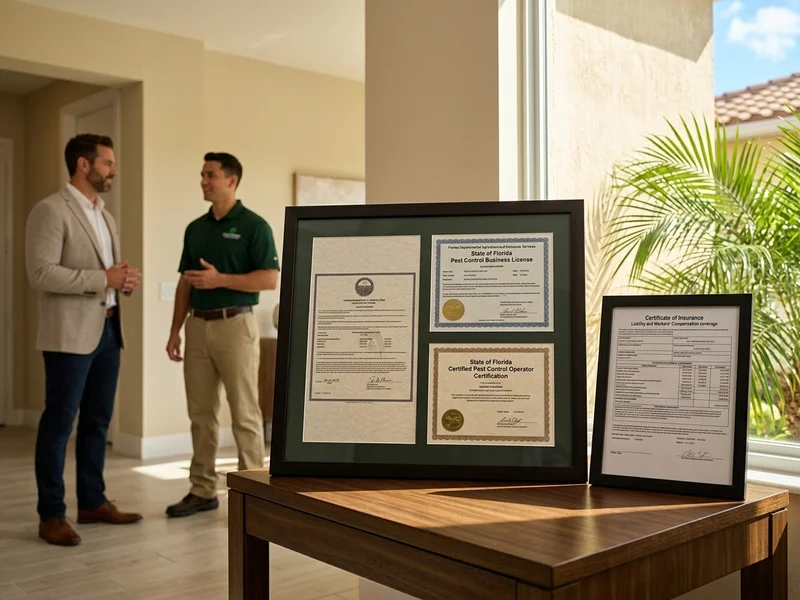
How to Find the Pest Control Term You Need
Four term categories covering treatment, species, service, and programs.
Treatment Method Terms
Gel bait, IGR, residual, repellent vs. non-repellent, exclusion, crack-and-crevice, void injection, and broadcast spray. Start here if you are trying to evaluate whether a treatment protocol is appropriate for your pest type.
Pest Species Terms
German cockroach (Blattella germanica), palmetto bug, ghost ant (Tapinoma melanocephalum), roof rat (Rattus rattus), Norway rat (Rattus norvegicus), oothecae, exuviae, and harborage. Start here to confirm you and the technician are talking about the same pest.
Service Agreement Terms
Guarantee, warranty, re-service, callback, service interval, one-time treatment, and follow-up visit. Start here before signing a pest control contract to understand what is and is not covered.
Program Terms
IPM, integrated pest management, monthly service, quarterly service, pest management program, conducive conditions, and monitoring. Start here to understand the difference between reactive treatment and ongoing prevention programs.
Pest Control Terms Glossary -- Complete Definitions
Treatment Method Terms
Broadcast spray: Application of a pesticide product over a wide area -- walls, floors, or exterior perimeter -- rather than targeted at specific pest zones. Broadcast spray is appropriate for exterior perimeter treatment but is the wrong method for German roaches in the kitchen. Crack-and-crevice treatment: Application of insecticide directly into cracks, crevices, and voids where pests harbor. Requires specialized injection equipment. Used for bed bug harborage, German roach wall voids, and baseboard pest zones. Exclusion: Physical sealing of pest entry points using hardware cloth, copper mesh, caulk, door sweeps, and foam. The most durable form of pest prevention -- prevents entry rather than killing pests at or after entry.
Gel bait: A non-repellent paste-form insecticide applied in small drops at pest harborage zones. Insects consume and share the product with colony members through normal feeding behavior. The correct primary product for German roach elimination. IGR (insect growth regulator): Disrupts insect egg and nymph development -- prevents hatching and prevents nymphs from reaching reproductive maturity. Applied alongside gel bait in German roach programs to prevent the egg case rebound. Non-repellent: A pesticide formulation that insects cannot detect as harmful through chemical sensing, allowing them to consume and carry the product to the colony. Repellent: A pesticide formulation that insects detect as harmful and actively avoid. Causes pest scatter and colony relocation rather than elimination -- the wrong product for ants, German roaches, and bed bugs. Residual treatment: A pesticide application designed to remain active for 30 to 90 days after application. Used for exterior perimeter barrier establishment.
Pest Species Terms and Service Terminology
Exuviae: Shed insect skins -- translucent empty husks found in pest harborage zones. Bed bug exuviae in mattress seams are a reliable confirmation of active infestation. German roach exuviae in appliance cavities confirm harborage zone location. Ghost ant (Tapinoma melanocephalum): The most common ant species in South Florida homes. Tiny (1.5 mm), dark head with pale translucent abdomen. Super-colony structure with multiple queens and satellite nests. Responds only to non-repellent liquid bait. Harborage zone: Any location where a pest shelters, nests, or breeds. German roaches harbor in appliance motor cavities. Bed bugs harbor in mattress seams and bed frame joints. Identifying and treating harborage zones is essential for effective pest control. Oothecae: An insect egg case. German roach oothecae contain 30 to 40 eggs and hatch in 28 to 30 days. Resistant to the same contact-kill products that eliminate adults. IGR application is required to prevent oothecae from hatching after initial treatment.
Conducive conditions: Property conditions that attract or shelter pests -- moisture sources, landscape contact with the structure, open utility penetrations, food access points, and harborage materials. Identifying and correcting conducive conditions is a core IPM program component. IPM (integrated pest management): A pest management philosophy that prioritizes prevention, monitoring, exclusion, and targeted treatment over reactive broadcast spray. Programs monitor conditions between visits and adjust protocols based on monitoring data. Guarantee (pest control): A company's commitment to return and re-treat at no additional charge if pests return within the guarantee period. Bugstinct's standard guarantee is 30 days. Runway: A path regularly traveled by rodents, indicated by grease marks along wall lines, droppings, and physical evidence. Snap traps placed at confirmed runway locations are significantly more effective than random placement.
Treatment Method Terms -- Repellent vs. Non-Repellent Explained
| Comparison | Repellent Products | Non-Repellent Products |
|---|---|---|
| Insect detection | Insects detect chemically and actively avoid | Insects cannot detect as harmful -- consume and share normally |
| Effect on German roach colony | Colony scatters and entrenches deeper into structure | Workers carry to colony; queens and nest mates exposed |
| Effect on ants | Trail abandoned; colony establishes new trail in adjacent zone | Bait carried to satellite nests; colony-level elimination |
| Right for exterior perimeter | Yes -- residual contact barrier at foundation line | Not typical for perimeter application |
| Right for kitchen German roach treatment | No -- causes colony scatter and reduces bait uptake | Yes -- gel bait at harborage zones is the correct protocol |
Pest Control Terms -- Definitions Homeowners Ask About Most
What is the difference between a guarantee and a warranty in pest control?
What does 'harborage zone' mean and why does it matter?
What are conducive conditions and should I fix them before pest control?
What does 'IPM' stand for and is it different from regular pest control?
What is a 'runway' in rodent control and why does it matter for trap placement?
Pest Control Terms by Category -- Quick Reference
The terminology organized by category for quick reference during a service consultation.
Treatment Products
Gel bait, IGR, residual, non-repellent bait, repellent spray, crack-and-crevice, void injection, exclusion materials.
South Florida Pest Species
German cockroach, palmetto bug, ghost ant, fire ant, roof rat, Norway rat, bed bug, subterranean termite.
Inspection Terms
Harborage zone, runway, conducive conditions, glue board, entry point, oothecae (egg case), exuviae (shed skin).
Service Terms
Guarantee, warranty, re-service, callback, one-time treatment, follow-up visit, service interval.
Program Terms
IPM, integrated pest management, monthly service, quarterly service, pest management program, monitoring protocol.
Structure Terms
Weep hole, soffit, fascia, utility penetration, foundation gap, void, crawlspace, attic zone.
Why Knowing These Terms Protects You as a Pest Control Buyer
Terminology knowledge is the practical foundation for evaluating service quality.
Verify the Correct Protocol
Knowing what gel bait and IGR mean lets you confirm that a company treating German roaches is using the correct protocol before they apply anything -- not after the wrong product makes the infestation worse.
Evaluate Guarantees Accurately
Understanding what a 30-day guarantee covers and what voids it helps you evaluate whether a company's guarantee is meaningful or a marketing phrase with conditions that limit its value.
Compare Quotes Fairly
A monthly service quote and a quarterly service quote are not comparable without knowing that quarterly service leaves a 60-day protection gap in South Florida's year-round pest climate.
Ask Better Questions
Homeowners who understand harborage zones, runway placement, and IGR requirements ask questions that reveal whether a technician is following the correct species-specific protocol.
Related Pest Control Resources
Ready to Hire a Pest Control Company That Uses the Right Terms and Protocols?
Bugstinct uses species-correct treatment protocols and clear service terms. 30-day guarantee. FDACS-licensed. Same-week scheduling across South Florida.