Pest Management FAQs -- IPM Programs and Prevention-First Service Explained
Pest management means something specific that most homeowners have not encountered before their first conversation with a licensed technician. These FAQs clarify what integrated pest management (IPM) actually means in practice, why it differs from reactive extermination, how to evaluate whether a program is being done correctly, and what results look like over three to six months of service.
- What integrated pest management (IPM) actually involves
- How pest management differs from reactive extermination
- What monitoring looks like in a real IPM program
- Cost, frequency, and what results to expect
What Pest Management Actually Means in South Florida
Pest management -- specifically integrated pest management or IPM -- is an approach that prioritizes prevention over reaction. Instead of waiting for a pest infestation to become visible before responding, an IPM program maintains continuous monitoring, exclusion, and barrier treatment to prevent infestations from establishing in the first place.
In South Florida, pest management matters more than it does in most regions because there is no winter. Ghost ants, German roaches, mosquitoes, and palmetto bugs do not experience a population die-off between November and March. A home without ongoing exterior protection in February is just as exposed as one without protection in August -- the pest pressure does not pause.
These FAQs answer the questions South Florida homeowners most commonly ask when first considering an IPM-based pest management program versus reactive one-time or as-needed pest control.
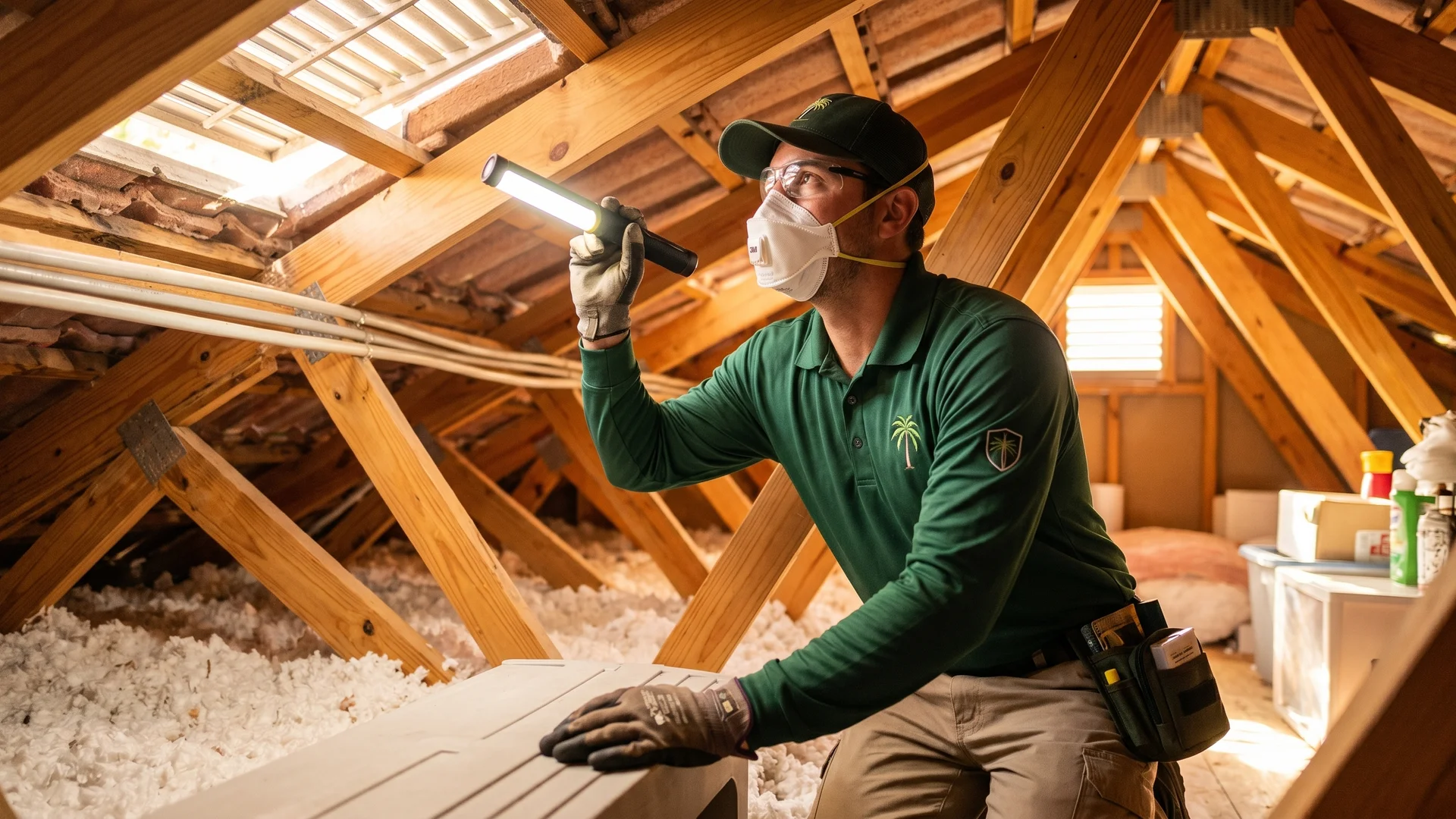
How Bugstinct's IPM-Based Pest Management Program Works
Four stages of a prevention-first pest management program for South Florida homes.
Initial Property Assessment
The program begins with a thorough inspection that documents current pest activity, entry points, harborage zones, and conducive conditions -- moisture, landscape contact, open utility penetrations. This baseline drives the initial treatment plan and gives the program something to compare against at future visits.
Exclusion and Condition Correction
Before chemical treatment, accessible entry points are sealed and conducive conditions are noted. Weep holes, soffit vents, door frame gaps, and foundation penetrations are addressed where possible. Landscape contact zones are noted for the homeowner to remediate.
Targeted Chemical Treatment
After exclusion work, treatment is applied based on the confirmed species and conducive conditions from the assessment. Non-repellent bait for ants. Gel bait with IGR for German roaches. Residual barrier for perimeter pests. Species-matched, not a fixed spray schedule.
Ongoing Monitoring and Adjustment
Recurring monthly visits include glue board inspection, activity comparison from the previous visit, and treatment adjustment when new species are detected or pressure increases. The program improves over time as the baseline data grows.
Common Pest Management Questions That These FAQs Answer
What Makes South Florida Pest Management Different From a Scheduled Spray Service
A scheduled spray service applies the same exterior treatment on a fixed calendar regardless of what was found at the last visit. A pest management program compares current conditions to previous monitoring data and adjusts the treatment response accordingly. If ghost ant pressure at the east foundation increased between April and May visits, that specific zone receives additional attention -- a fixed spray schedule applies the same product to the same zones regardless.
Monitoring data also catches new species before they establish. A German roach detected on a glue board in a garage -- before a single live roach appears in the kitchen -- can be addressed with targeted bait before the colony becomes an infestation. A scheduled spray program does not catch this because it does not monitor.
How Long Before a Pest Management Program Shows Results
Most South Florida homes see significant reduction in indoor pest activity within the first two to three monthly visits. The initial treatment eliminates existing active populations. The second visit confirms elimination and refreshes the exterior barrier. By the third visit, monitoring data begins to show declining trend lines as the program's prevention layer takes hold.
The program matures over three to six months as exclusion work accumulates, the monitoring baseline grows, and the technician develops a property-specific understanding of which zones require more attention. A well-maintained IPM program at month six requires less intensive treatment per visit than at month one -- the structure and conditions have improved.
Pest Management Program vs. Reactive Pest Control
| Comparison | Reactive Pest Control | Pest Management Program |
|---|---|---|
| Treatment trigger | Called after pest activity becomes a visible problem | Proactive before activity reaches infestation threshold |
| Monitoring between visits | None -- starts from scratch each service call | Glue boards and visit notes track trends between visits |
| Protocol adjustment | Fixed product on fixed schedule regardless of findings | Protocol adjusts based on current monitoring data |
| Entry point work | Rarely included | Exclusion sealing included at each visit |
| Chemical use over time | Higher volume to address established infestations | Lower volume at preventive levels as program matures |
| Annual cost | Unpredictable -- emergency treatments plus standard visits | Predictable monthly rate with lower total annual spend |
Pest Management FAQs -- Questions South Florida Homeowners Ask Most
Is pest management the same as pest control?
How often should pest management service visits happen in South Florida?
What is an insect growth regulator (IGR) and why does my pest management program use it?
Does pest management use fewer chemicals than regular pest control?
What should a pest management technician do at each visit that a spray service does not?
Is pest management more expensive than one-time or reactive pest control?
Can I start a pest management program if I already have an active infestation?
What pests does a Bugstinct pest management program cover?
What a Bugstinct Pest Management Program Includes
Prevention-first, monitoring-driven pest management for South Florida homes.
Initial Property Assessment
Full inspection documenting pest activity, conducive conditions, harborage zones, and entry points before any treatment begins.
Monthly Monitoring
Glue board inspection and activity comparison at every visit track pest pressure trends and allow proactive protocol adjustment.
Entry Point Sealing
Foundation gaps, utility penetrations, and exterior access points sealed progressively to build physical exclusion over time.
Species-Targeted Treatment
Products matched to the confirmed pest species at each visit -- not a fixed spray schedule regardless of current monitoring findings.
Monthly Barrier Refresh
Exterior barrier renewed monthly before residual dissipates, maintaining continuous protection through all of South Florida's pest seasons.
30-Day Service Guarantee
If pest activity occurs between visits, Bugstinct returns at no additional charge within the 30-day guarantee window.
Why Pest Management Produces Better Long-Term Results
The investment in prevention consistently outperforms repeated reactive treatment in South Florida.
Declining Pest Pressure Over Time
As the program matures, monitoring data shows consistently lower pest activity. A managed home improves over time rather than cycling between infestation and reactive treatment.
Less Chemical Use Over Time
Sustained prevention requires less chemical intervention than elimination of established infestations. The managed home has lower total product use over a 12-month period.
Predictable Monthly Cost
Monthly management service replaces unpredictable emergency treatment costs with a consistent monthly rate. No surprise service calls mid-year.
Year-Round Protection
The exterior barrier is maintained continuously. South Florida's year-round pest pressure does not translate to indoor infestations because the perimeter is reinforced before each pest surge.
Related Pest Management Resources
Ready to Start a Pest Management Program in South Florida?
Bugstinct provides licensed IPM-based pest management with monthly monitoring, exclusion, and a 30-day guarantee across Broward, Miami-Dade, and Palm Beach counties.