Pest Prevention Checklist -- Practical Steps for South Florida Homeowners
The best pest control outcome is one where the professional treatment maintains a stable, low-pest environment rather than repeatedly eliminating established infestations. This pest prevention checklist covers the actionable steps South Florida homeowners can take to reduce the conducive conditions that attract and shelter ghost ants, palmetto bugs, German roaches, roof rats, and mosquitoes -- the five most common pest pressure sources in Broward, Miami-Dade, and Palm Beach counties.
- Exterior foundation and perimeter steps
- Kitchen and food storage prevention
- Attic, roof, and entry point actions
- Yard and moisture reduction steps
Why These Specific Prevention Steps Matter in South Florida
South Florida's subtropical climate creates unique pest prevention challenges. Irrigated HOA landscaping stays wet year-round, providing permanent ghost ant foraging habitat adjacent to the foundation. Heavy rainfall creates recurring standing water in yards and low-lying areas throughout the wet season. High humidity accelerates mold and wood decay that creates moisture damage attracting carpenter ants and drywood termites.
The standard pest prevention advice -- 'keep food sealed, fix leaks' -- applies everywhere. This checklist covers the South Florida-specific conditions that standard advice misses: landscape mulch management at the foundation, weep hole sealing in stucco and brick construction, soffit and fascia gap inspection common to South Florida's construction age, and the specific moisture sources that persist through South Florida's dry season.
Each item on this checklist reduces a specific pest pressure source. Completing the full checklist alongside monthly professional service produces better long-term results than either approach alone.
How to Work Through the Pest Prevention Checklist
Organized by property area so you can complete each zone systematically.
Start at the Exterior Foundation
Walk the entire foundation perimeter and check: landscape mulch distance from the structure (target 6 inches clearance), weep hole accessibility for sealing, vegetation and landscape beds touching the wall, and any debris, lumber, or items stored against the exterior wall that provide pest harborage.
Move to Roof and Attic Access Points
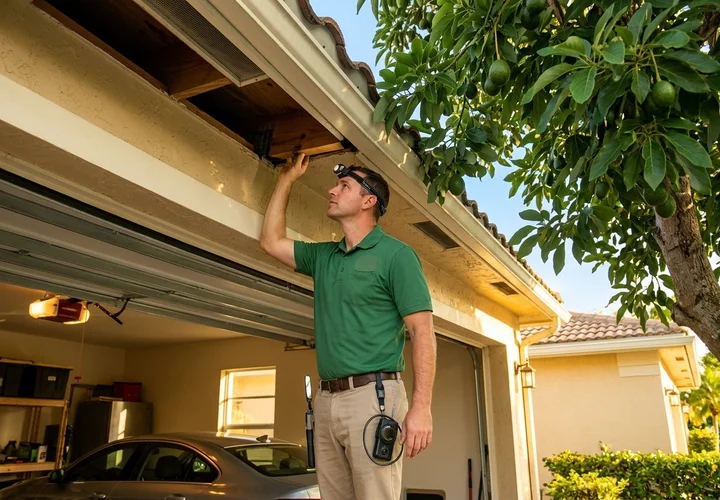
From the ground, inspect the roofline for: tree branches overhanging or contacting the roof, soffit-fascia gaps visible from the yard, visible holes or damage at gable vents, and utility conduit or wire penetrations entering the structure from the roofline.
Inspect Interior Moisture Zones
Check under all bathroom and kitchen sinks for slow drips, moisture staining, or cabinet bottom swelling. Check the water heater area for condensation or small drips. Check washer connections for slow moisture seeping into the floor or cabinet below.
Address Yard and Standing Water Sources
Walk the yard after any rainfall and identify low spots that hold standing water for more than 24 hours. Check plant saucers, gutters, and any decorative containers. Identify any areas where irrigation is creating sustained wet soil within 12 inches of the foundation.
Pest Prevention Checklist by Area
Exterior Foundation and Perimeter Checklist
Clear landscape mulch to 6 inches from all foundation surfaces. Mulch touching the foundation creates a moisture-rich harborage zone for palmetto bugs, carpenter ants, and moisture-dependent insects. Pull mulch back to a clear zone around the entire perimeter. Seal accessible weep holes with steel wool or copper mesh. Weep holes are the small openings in brick and stucco construction at the bottom of exterior walls -- they are required for drainage but also the primary entry point for palmetto bugs and other crawling insects. Standard foam sealant allows them to breathe while preventing insect entry.
Remove landscape plants touching the exterior walls. Foliage contact with the structure provides a sheltered pathway for insects to move from the landscape to the building. Trim any vegetation to maintain a 12-inch gap from exterior walls. Remove stored items (lumber, garden equipment, boxes, pots) from contact with exterior walls. Stored items against exterior walls create pest harborage zones adjacent to the structure.
- Mulch: 6-inch clearance from all foundation surfaces
- Weep holes: seal with steel wool or copper mesh -- not foam alone
- Vegetation: 12-inch clearance from exterior walls
- Stored items: remove from contact with exterior walls and foundation
- Firewood: store away from the structure, never against exterior walls
Interior, Moisture, and Roof Zone Checklist
Kitchen: Seal gaps around all plumbing penetrations under the sink with caulk or foam. German roaches enter through plumbing gaps between cabinet interiors and the wall. Repair any drips under the sink -- moisture under the sink is the primary condition sustaining German roach and ghost ant activity in the kitchen. Store dry goods in sealed hard containers. Paper bags and loose cardboard boxes provide both food access and harborage material.
Attic and roof: Trim tree branches to maintain 6-foot clearance from the roofline. Roof rats use overhanging branches as bridges that bypass ground-level perimeter treatment. Inspect soffit-fascia junction for gaps visible from the ground -- a pencil-width gap is enough for a roof rat to enter. Cover gable vents with 1/4-inch hardware cloth if existing screens are damaged or absent. Inspect where utility conduits, HVAC lines, and wiring enter the structure from the roofline -- seal gaps around any penetrations.
With vs. Without Pest Prevention Checklist Steps
| Comparison | Without Prevention Steps | With Prevention Checklist Completed |
|---|---|---|
| Ghost ant pressure at kitchen | Mulch at foundation sustains adjacent ant colonies; foraging trails continue indoors | Mulch cleared; adjacent harborage eliminated; indoor foraging pressure reduced |
| Palmetto bug entry | Weep holes and soffit gaps open; regular palmetto bug entry continues | Weep holes sealed; primary entry routes blocked |
| Roof rat access | Tree canopy overhanging roof provides bridge bypassing ground treatment | Canopy trimmed to 6 feet; ground-level barrier is the primary exclusion |
| Mosquito breeding | Standing water in plant saucers, gutters, and yard low spots supports breeding | Standing water eliminated; mosquito breeding cycle interrupted |
| German roach kitchen conditions | Plumbing gap under sink and moisture drips sustain activity between visits | Gap sealed and drips repaired; kitchen conditions no longer sustain colony |
Pest Prevention Checklist Questions Answered
How much mulch clearance do I need from my foundation to reduce pest pressure?
How do I seal weep holes without blocking drainage?
Does trimming trees away from the roof actually prevent rats?
What items stored near the house attract pests?
How often should I go through the pest prevention checklist?
Pest Prevention Checklist by Area
Quick reference for South Florida homeowners working through the full property prevention checklist.
Foundation Perimeter
6-inch mulch clearance, weep hole sealing, vegetation gap, stored item removal, and debris clearance from all foundation surfaces.
Roof and Attic Zone
6-foot tree canopy clearance from roofline, soffit-fascia gap inspection, gable vent screen condition, and utility penetration sealing.
Moisture and Drainage
Under-sink drip repair, irrigation proximity review, gutter clearance, plant saucer water elimination, and yard low-spot drainage.
Entry Points
Door sweep condition, threshold seals, garage door bottom gap, window screen integrity, and utility penetrations at grade.
Kitchen and Food Storage
Plumbing gap sealing, sealed container food storage, appliance area moisture check, and under-sink condition review.
Quarterly Walk-Through
Full checklist completion quarterly. Post-wet-season October walk-through and pre-summer March walk-through as the two most important annual reviews.
How Pest Prevention Steps Improve Your Monthly Service Results
Prevention reduces the pest pressure that monthly service has to overcome.
Less Pest Pressure Each Visit
Removing conducive conditions reduces the pest population adjacent to the structure. Monthly service has less population pressure to overcome, and the barrier treatment holds longer per application.
Less Chemical Product Required
A lower ambient pest pressure requires less product per visit to maintain control. Prevention reduces the chemical load of the program over a 12-month period.
Fewer Emergency Callback Situations
Ghost ant and palmetto bug infestations that establish from conducive conditions are the most common driver of between-visit callbacks. Removing those conditions prevents the infestations that trigger callbacks.
Lower Total Annual Pest Control Cost
Homeowners who complete prevention checklist steps annually have lower callback rates and fewer emergency call situations. Prevention produces a measurable reduction in total annual pest control spend over a three-to-five year horizon.
Related Pest Prevention Resources
Checklist Complete? Pair It With Professional Monthly Service.
Bugstinct's monthly pest management program combined with the prevention checklist produces the best long-term results. Licensed. Guaranteed. Same-week setup.