Pest and Rodent Control FAQs -- Rats, Mice, and Combined Service in South Florida
Rodent problems in South Florida homes almost always occur alongside insect infestations -- because the same entry points, moisture sources, and structural conditions that attract rats and mice also attract insects. These FAQs cover the most common questions about rodent identification, entry point inspection, trap placement, exclusion sealing, and how combined pest and rodent service works.
- Rat vs. mouse identification in South Florida
- How rodents enter homes and where to look first
- Trap placement and exclusion sealing
- Combined pest and rodent service programs
Rodent Control in South Florida -- What Makes It Different
South Florida's two primary rodent species -- the roof rat (Rattus rattus) and the Norway rat (Rattus norvegicus) -- behave differently and require different control approaches. Roof rats are excellent climbers that enter homes through soffit gaps, roof-to-wall junctions, and overhanging tree branches. Norway rats are ground-level animals that enter through foundation gaps, weep holes, and utility penetrations at grade.
Mice (Mus musculus) are less common in South Florida's exterior environment than rats but are regularly found indoors, particularly in commercial kitchens and food storage areas. A mouse can enter through a gap as small as a dime, which makes comprehensive entry point sealing critical for elimination.
Rodent control in South Florida requires species identification before treatment because roof rat entry points and trap locations are completely different from Norway rat and mouse control zones. These FAQs explain the specific questions homeowners most often have before hiring for rodent service.
How Professional Rodent and Pest Control Works for South Florida Homes
Four steps from entry point inspection to exclusion sealing and follow-up.
Rodent Species Identification
Inspection confirms the rodent species by evaluating droppings, entry point locations, gnaw marks, and runway evidence. Roof rats leave evidence at the upper levels of the structure. Norway rats leave evidence at the foundation. Mouse activity is typically concentrated in food storage and kitchen areas.
Entry Point Mapping
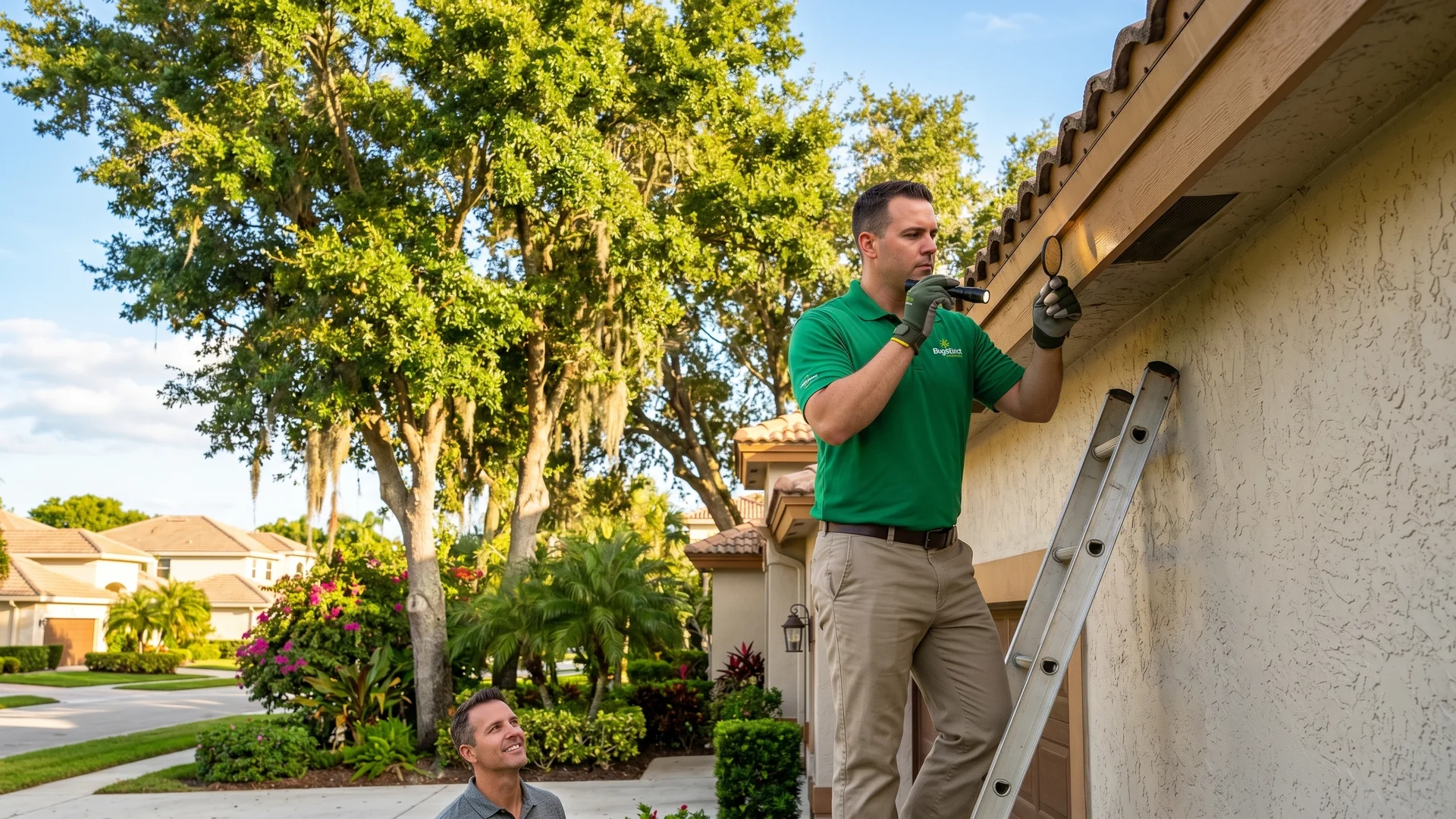
All potential entry points are inspected and documented: soffit-fascia gaps, roof-to-wall junctions, utility penetrations, weep holes, foundation gaps, and any vegetation contact with the roof or walls. Entry points are photographed and included in the service report.
Trap Deployment at Confirmed Runways
Snap traps are deployed at confirmed runway locations -- not random placement. Effective trap placement requires reading the rodent's movement pattern from droppings, grease marks, and physical evidence. Consumer trap placement without runway identification is often ineffective.
Exclusion Sealing and Follow-Up
Entry points are sealed with appropriate materials: galvanized hardware cloth for large gaps, copper mesh and caulk for utility penetrations, foam and hardware cloth for soffit gaps. Follow-up at 10 to 14 days confirms captures and checks for any remaining activity through sealed entry points.
Rodent and Pest Control Together -- Why Combined Service Matters
Why Rodent and Pest Problems Occur Together in South Florida
Rodents and insects share the same conducive conditions: moisture, food access, and structural entry points. A home with a soffit gap large enough for a roof rat also allows ghost ants and palmetto bugs to enter. The German roach infestation that establishes in a kitchen with a plumbing penetration gap attracts Norway rats to the same area. Addressing one without the other is the primary reason both problems recur.
Combined pest and rodent service visits inspect the property as a system -- structural conditions, moisture sources, food access points, and entry gaps -- rather than addressing the visible symptom in isolation. The entry point sealed during a rodent service visit also blocks insect entry. The interior barrier applied during a pest control visit deters insects that would otherwise attract rodents.
What Rodent Damage Looks Like and When to Act Fast
Roof rats and Norway rats gnaw continuously -- on electrical wiring, insulation, HVAC ductwork, and structural wood. A rodent in the attic that is not addressed within a week has likely gnawed at least one electrical cable. Attic insulation contaminated by rodent urine and droppings requires replacement, adding substantial remediation cost beyond the extermination service. Acting within 48 to 72 hours of confirmed indoor rodent activity significantly reduces total damage.
Signs of active rodent activity requiring immediate action: droppings along wall lines or in cabinet corners, gnaw marks on food packaging or structural materials, scratching sounds in the ceiling or wall at night, and visible grease marks along walls or beams from repeated contact with rat runways. Any of these signs warrants a call for priority scheduling.
Consumer Rodent Control vs. Professional Rodent and Pest Service
| Comparison | Consumer Rodent Products | Professional Service |
|---|---|---|
| Entry point identification | Not included -- traps placed without entry map | Full entry point inspection and documentation |
| Trap placement | Random or high-traffic area placement | Deployed at confirmed runway locations from inspection |
| Entry sealing | Not included | Galvanized mesh, copper mesh, and caulk at all mapped entry points |
| Rodenticide risk | Consumer bait stations risk secondary poisoning of pets and wildlife | Professional placement minimizes secondary exposure risk |
| Combined pest coverage | Rodent-only; insect problems remain | Pest and rodent addressed in the same service visit |
| Follow-up and confirmation | No follow-up -- homeowner self-monitors | 10-day follow-up confirms captures and activity status |
Pest and Rodent Control FAQs -- Most Common Questions
How do I know if I have rats or mice?
What does it mean if I hear scratching in my attic at night?
How do rodents get into my South Florida home?
Should I use rodenticide bait stations myself?
Why did I catch one rat but I still see activity?
Does Bugstinct handle both pest and rodent problems in one service?
How long does rodent control take?
Are snap traps or glue boards more effective for rodents?
Rodent Control Services Bugstinct Provides in South Florida
Comprehensive rodent elimination and exclusion for Broward, Miami-Dade, and Palm Beach County homes.
Entry Point Inspection
Full exterior inspection mapping all rodent access points: soffit gaps, foundation penetrations, roof junctions, weep holes, and utility entries.
Runway Trap Deployment
Snap traps deployed at confirmed runway locations identified during inspection -- not random placement. Multiple traps deployed for family groups.
Exclusion Sealing
Galvanized hardware cloth, copper mesh, and caulk sealing at all mapped entry points to prevent re-entry after active animals are removed.
Attic and Crawlspace Inspection
Roof rat activity assessment including harborage identification in insulation and gnaw damage to wiring and structural wood.
10-Day Follow-Up
Return visit at 10 to 14 days confirms captures, checks entry points, and verifies activity has ceased before closing the service.
30-Day Guarantee
Every rodent control service includes a 30-day guarantee. If activity continues within 30 days, Bugstinct returns at no additional charge.
Why Acting Quickly on Rodent Problems Matters
Every week of delay allows wiring damage, contamination, and population growth to compound.
Stop Wiring and Insulation Damage
Rodents gnaw electrical wiring and insulation continuously. A roof rat in the attic causes damage within days of entry. Same-week service stops damage before it escalates to a fire hazard or remediation cost.
Prevent Population Growth
Rats reproduce rapidly once established indoors. A mated pair can produce a colony of 50 animals within six months. Priority entry point sealing stops the growth cycle before it compounds.
Eliminate the Entry Point, Not Just the Animal
Removing the active rodent without sealing the entry point guarantees re-entry from the same population outside. Professional exclusion sealing is the step that breaks the cycle.
Combined Pest and Rodent Coverage
The same structural vulnerabilities allow both insects and rodents to enter. Combined service addresses the system, not just the symptom -- reducing both pest types in one treatment visit.
Related Rodent and Pest Control Resources
Rodent Activity in Your South Florida Home? Call Now.
Bugstinct provides licensed rodent and pest control with entry point inspection, runway trap deployment, exclusion sealing, and a 30-day guarantee. Same-week scheduling available.