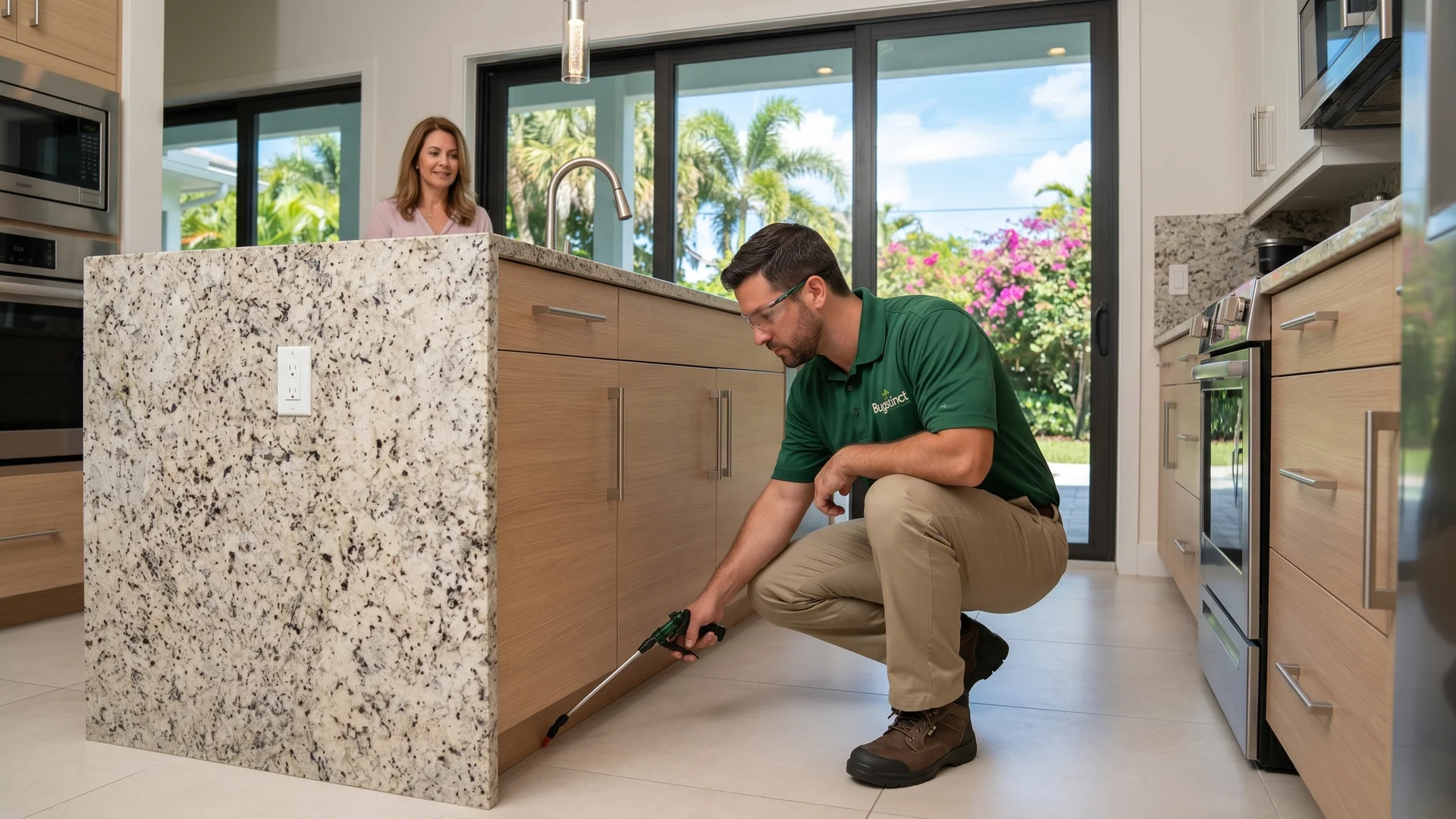
Bed Bug Treatment Guide -- Identification, Treatment, and What to Expect
Bed bugs are one of the most misunderstood pest problems homeowners face. Consumer products consistently fail to eliminate them because they address the mattress surface while leaving the majority of the infestation untouched in bed frame joints, box spring interiors, baseboard cracks, and upholstered furniture. This guide explains how to confirm a bed bug infestation, what professional treatment involves, how to prepare your home for maximum effectiveness, and what realistic results look like.
- How to identify bed bugs and confirm an active infestation
- Why consumer products fail and what professional treatment does differently
- How to prepare your home before treatment
- What results to expect and when
How to Confirm You Have Bed Bugs
Bed bugs are small (1 to 5 mm), flat, oval insects that are brown before feeding and reddish-brown after. Adult bed bugs are visible to the naked eye but difficult to spot because they hide in harborage zones and only emerge at night to feed. The most reliable signs of infestation are not necessarily live insects -- they are the evidence bed bugs leave behind.
Look for small blood spots or rust-colored staining on bedding or the mattress surface, which result from bed bugs being crushed during sleep or from digested blood excretion. Look for shed skins (exuviae) -- translucent, empty husks -- in mattress seams and bed frame joints. A sweet, musty odor in the bedroom is a secondary indicator of a moderate to severe infestation. If any of these signs are present, a professional inspection is warranted before attempting any treatment.
Bite marks alone are not a reliable confirmation of bed bugs. Bites vary significantly between individuals -- some people react strongly while others show no skin response at all. Flea bites, mosquito bites, and allergic reactions can all produce similar patterns. Confirm bed bugs through the physical evidence above before assuming you have an active infestation.

How Professional Bed Bug Treatment Works
A structured protocol from inspection to confirmed clearance.
Full Harborage Zone Inspection
Professional treatment begins with a systematic inspection of all bed bug harborage zones: mattress seams and tufts, box spring interior, bed frame joints and screw points, headboard crevices, baseboard cracks, electrical outlet voids, nightstand drawer tracks, and upholstered furniture in the affected room. The inspection map is documented before any product is applied.
Residual Treatment at All Harborage Points
Residual insecticide is applied at every confirmed harborage zone using crack-and-crevice and void injection techniques that reach pests in areas consumer sprays cannot access. Surface-only spray application misses the majority of the infestation -- professional treatment targets the source.
IGR Application to Suppress the Hatch Cycle
An insect growth regulator (IGR) is applied throughout the treated area. IGR prevents bed bug egg cases from hatching after initial treatment -- the most common reason bed bug infestations appear to resolve and then reappear within three weeks.
30-Day Follow-Up and Clearance Confirmation
A follow-up inspection at 21 to 30 days confirms that the IGR has suppressed any hatching from egg cases present during treatment. If activity persists, re-treatment is provided under the service guarantee. The homeowner is also advised on ongoing monitoring and prevention.
What You Need to Know About Bed Bug Treatment
Why Bed Bug Infestations Return After Consumer Treatment
The most common reason bed bug infestations reappear after consumer product treatment is that the egg cases (oothecae) present in the harborage zones were not addressed. Consumer products provide contact kill of visible insects -- they do not contain an insect growth regulator that prevents hatching. A bed bug egg case takes 6 to 17 days to hatch at room temperature. A treatment applied today to visible adults leaves behind dozens of egg cases that will begin hatching within two weeks.
The second most common reason is incomplete harborage inspection. Consumer products applied to the mattress surface leave untreated populations in the box spring interior, bed frame joints, and baseboard crevices. The untreated population in these harborage zones repopulates the mattress surface within days of a surface-only treatment.
- Egg cases hatch 6 to 17 days after initial treatment if IGR was not applied
- Box spring interior is a primary harborage zone typically missed by surface-only treatment
- Bed frame joints and headboard crevices harbor satellite populations adjacent to the sleep area
- Baseboard cracks and electrical outlet voids are secondary harborage zones requiring crack-and-crevice treatment
Bed Bug Risk Factors Specific to South Florida
South Florida's position as a major travel destination and international gateway creates elevated bed bug introduction risk compared to less-visited regions. Fort Lauderdale-Hollywood International Airport, cruise terminal arrivals, hotel stays, and Airbnb-style short-term rentals all represent bed bug exposure vectors. Luggage is the most common introduction pathway -- bed bugs enter bags in infested hotel rooms and are transported home.
Multi-unit housing in Broward and Miami-Dade counties -- condominiums, townhomes, and apartment complexes -- creates shared-wall spread risk that is not present in single-family homes. Bed bugs can move through wall voids, electrical conduit, and plumbing penetrations between adjacent units. Treatment of an affected unit without addressing shared-wall boundary points can result in reinfestation within weeks from the neighboring unit.
Consumer Bed Bug Products vs. Professional Treatment
| Comparison | Consumer Products | Professional Treatment |
|---|---|---|
| Inspection scope | Self-inspection of mattress surface only | Full harborage zone inspection by licensed technician |
| Harborage coverage | Surface spray, cannot reach frame joints or box spring interior | Crack-and-crevice and void injection at all harborage zones |
| Egg case management | No IGR -- eggs hatch 6 to 17 days after treatment | IGR applied throughout to prevent hatching |
| Result durability | Temporary knockdown with high reinfestation rate | Lasting elimination with follow-up confirmation |
| Guarantee | None | 30-day free re-treatment if activity continues |
| Cost | $20 to $100 for consumer products, often multiple rounds needed | Professional service pricing with guaranteed outcome |
Bed Bug Treatment Guide -- Frequently Asked Questions
How do I know if I have bed bugs or another pest?
Do I need to throw away my mattress if I have bed bugs?
How should I prepare my home before bed bug treatment?
How long does bed bug treatment take?
How long after treatment until I know if it worked?
Key Facts About Professional Bed Bug Treatment
What separates an effective bed bug treatment from one that fails.
Harborage-First Inspection
The inspection must cover all harborage zones beyond the mattress surface. If a technician does not inspect the box spring interior, bed frame, and baseboards, the inspection is incomplete.
IGR Is Non-Negotiable
A bed bug treatment without IGR application leaves the egg case population intact. Without IGR, reinfestation from hatching is nearly certain within two to three weeks.
Preparation Affects Outcome
The pre-treatment preparation checklist significantly affects treatment effectiveness. Unlaundered bedding and clutter on the floor reduce the technician's access to harborage zones.
30-Day Guarantee
A credible bed bug treatment includes a 30-day guarantee with free re-treatment if activity continues within that window.
Mattress Encasement
After treatment, a bed bug-proof encasement on the mattress and box spring eliminates harborage on the sleeping surface and makes any future activity easier to detect.
Discreet Service
Professional bed bug service is conducted discreetly. Bugstinct uses unmarked vehicles and professional service protocols in HOA and condominium settings.
What Professional Bed Bug Treatment Delivers That DIY Cannot
The differences between self-treatment and licensed professional service determine whether the infestation resolves.
Harborage Zone Access
Professional crack-and-crevice and void injection equipment reaches harborage in spaces consumer spray products cannot access -- frame joints, box spring interiors, baseboard voids.
IGR Application
Licensed technicians apply IGR that suppresses the hatch cycle -- the step that determines whether the infestation is resolved or merely temporarily suppressed.
Documented Inspection
A professional inspection maps the full infestation extent before treatment, ensuring every harborage zone is addressed and the follow-up has a baseline to compare against.
Service Guarantee
Professional treatment comes with a 30-day guarantee. Consumer products come with no re-service commitment if the infestation continues.
Related Bed Bug Resources
Bed Bugs Confirmed? Get Professional Treatment Now.
Bugstinct provides licensed bed bug treatment with full harborage inspection, IGR application, and a 30-day guarantee. Same-week appointments in South Florida.