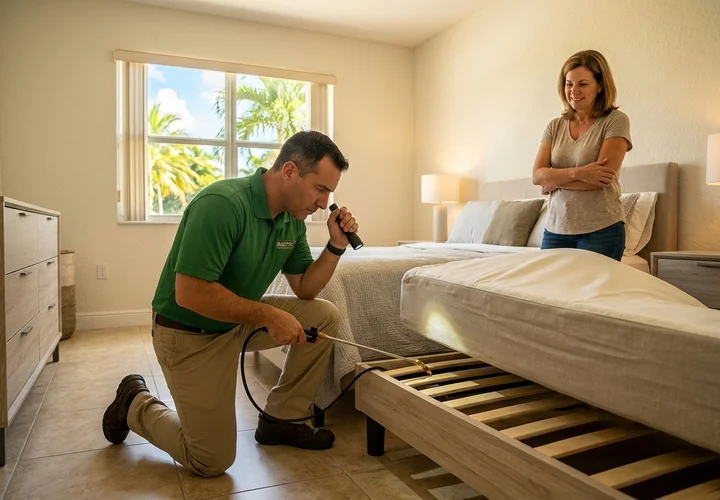
Bed Bug Treatment FAQs -- Identification, Preparation, and What to Expect
Bed bug infestations are one of the most stressful pest situations a homeowner faces -- and also one of the most misunderstood. Consumer products consistently fail because they address the mattress surface while leaving most of the infestation untouched in frame joints, box spring interiors, and baseboard crevices. These FAQs answer the most common bed bug questions from South Florida homeowners at every stage of the problem.
- How to identify bed bugs and confirm an active infestation
- Why consumer products fail and what professional treatment does differently
- How to prepare your home before bed bug treatment
- What results to expect and when to confirm the infestation is resolved
What South Florida Homeowners Need to Know About Bed Bugs Before Calling
South Florida's high volume of international travel, hotel stays, and cruise arrivals creates elevated bed bug introduction risk compared to most US markets. Fort Lauderdale-Hollywood International Airport, cruise terminal arrivals, and the region's hotel and short-term rental density all represent bed bug exposure vectors. Luggage is the most common introduction pathway -- bed bugs enter bags in infested hotel rooms and are transported home.
Multi-unit housing in Broward and Miami-Dade counties -- condominiums, townhomes, and apartments -- adds a shared-wall spread risk that single-family homeowners do not face. Bed bugs can move through wall voids, electrical conduit, and plumbing penetrations between units. Treatment of one unit without addressing shared-wall boundary points often results in reinfestation within weeks.
Understanding these South Florida-specific risk factors helps homeowners ask the right questions before hiring, prepare correctly before treatment, and interpret results accurately after service.
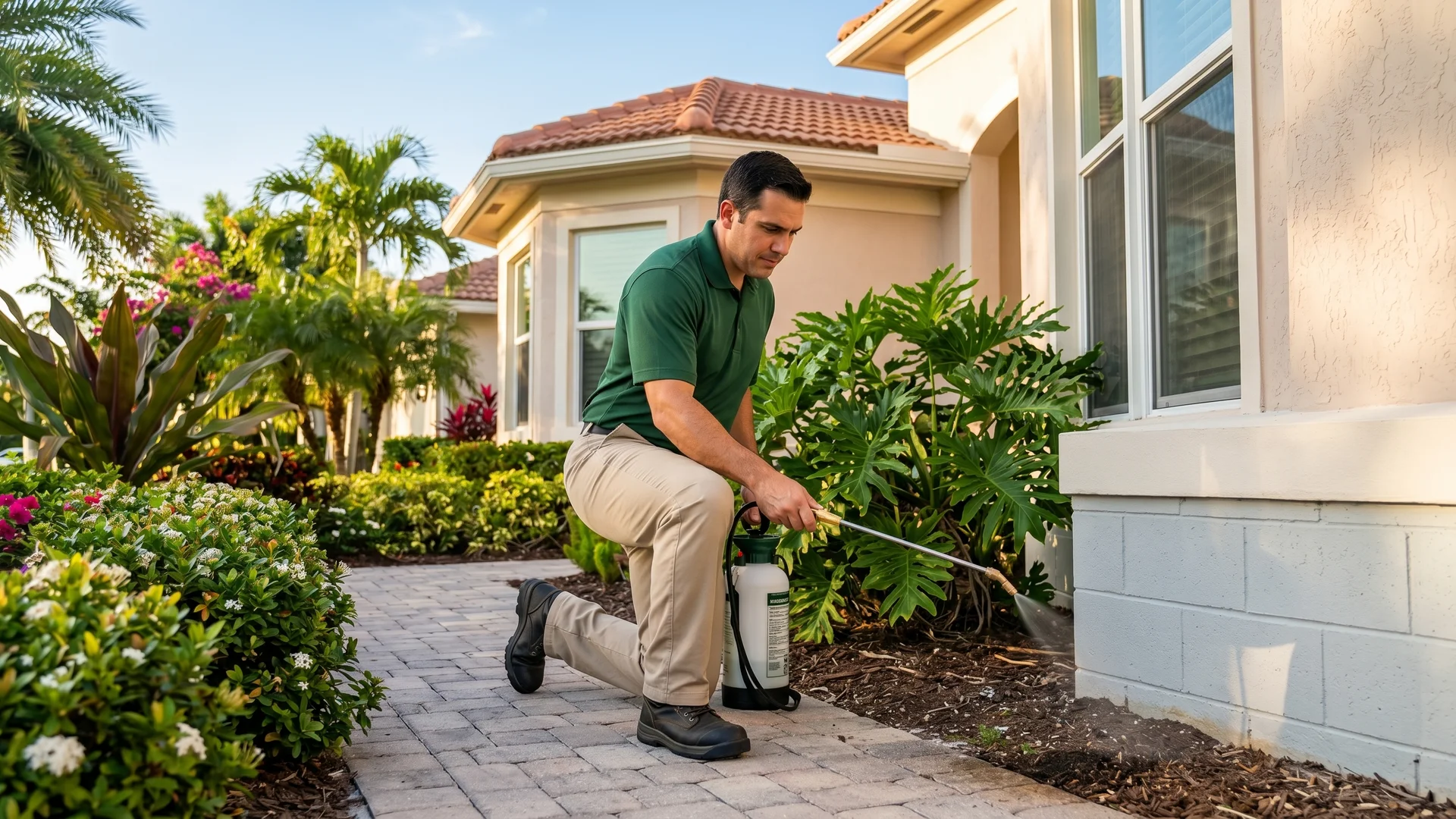
How to Prepare for a Professional Bed Bug Treatment
Preparation quality significantly affects treatment effectiveness -- what you do before the technician arrives matters.
Launder All Bedding on High Heat
Wash and dry all bedding, pillowcases, and clothing in the affected room at high heat -- minimum 120 degrees Fahrenheit. Dry on high heat for at least 30 minutes. Place dried items in sealed bags immediately after drying. Do not return items to the bed until after treatment is complete and the technician advises.
Clear the Floor and Move Furniture
Remove all clothing and clutter from the floor in affected rooms. Move furniture away from walls to give the technician access to baseboards, electrical outlets, and bed frame joints. Clutter on the floor limits harborage zone access and reduces treatment thoroughness.
Do Not Apply Consumer Products Before Treatment
Do not spray the mattress or bed frame with any consumer product before the scheduled service. Repellent residue can interfere with professional products and cause bed bugs to scatter to untreated harborage zones before treatment is applied.
Plan to Vacate During Treatment
Plan to be away from treated rooms for two to four hours after application. Your technician will advise on specific re-entry timing based on the products used. Pets should also be removed from treated areas during and for two to four hours after service.
Why Bed Bug Infestations Return After Consumer Treatment
The Two Reasons Consumer Bed Bug Treatment Fails
The most common reason bed bug infestations reappear after consumer product treatment is that the egg cases present in harborage zones were not addressed. Consumer products provide contact kill of visible insects -- they do not contain an insect growth regulator that prevents egg case hatching. Bed bug egg cases hatch in 6 to 17 days at room temperature. A treatment applied today to visible adult bed bugs leaves behind dozens of egg cases that will begin hatching within two weeks.
The second most common reason is incomplete harborage inspection. Consumer products applied to the mattress surface leave untreated populations in the box spring interior, bed frame joints, headboard crevices, and baseboard voids. The population in these untreated harborage zones repopulates the mattress within days of a surface-only treatment. Professional treatment uses crack-and-crevice and void injection equipment that reaches harborage in spaces consumer sprays cannot access.
- Egg cases hatch 6 to 17 days after treatment if no IGR was applied
- Box spring interior is a primary harborage zone typically missed by surface spray
- Bed frame joints, screw points, and headboard crevices harbor satellite populations
- Baseboard cracks and outlet voids are secondary harborage requiring crack-and-crevice treatment
Consumer Bed Bug Products vs. Professional Treatment
| Comparison | Consumer Products | Professional Treatment |
|---|---|---|
| Inspection scope | Self-inspection of visible mattress surface | Full harborage zone inspection by licensed technician |
| Harborage coverage | Surface spray; cannot reach frame joints or box spring interior | Crack-and-crevice and void injection at all harborage zones |
| Egg case management | No IGR applied; eggs hatch 6 to 17 days after treatment | IGR applied throughout to prevent hatching |
| Result durability | Temporary knockdown with high reinfestation rate | Lasting elimination with follow-up confirmation at 21 to 30 days |
| Guarantee | None | 30-day free re-treatment if activity continues |
| Cost | $20 to $100, often multiple rounds needed for same result | Professional service pricing with guaranteed outcome |
Bed Bug Treatment FAQs -- Answered by Bugstinct's Licensed Technicians
How do I know if I have bed bugs and not something else?
Do I need to throw away my mattress if I have bed bugs?
How should I prepare my home before a bed bug service?
How long does bed bug treatment take?
When will I know the bed bug treatment worked?
Is it safe to sleep in my room after bed bug treatment?
Can bed bugs spread from one room to another in my home?
We live in a condo -- can bed bugs come from the neighboring unit?
How much does bed bug treatment cost in South Florida?
What Bugstinct's Bed Bug Treatment Includes
A structured, harborage-first protocol that reaches the infestation source -- not just the mattress surface.
Full Harborage Inspection
Every harborage zone inspected before treatment: mattress seams, box spring interior, bed frame joints, headboard, baseboards, outlet voids, and nightstand tracks.
IGR Application
Insect growth regulator applied throughout the treatment zone to prevent egg cases from hatching after the active population is eliminated.
Crack-and-Crevice Treatment
Residual insecticide injected at all harborage zones using crack-and-crevice equipment that reaches spaces consumer sprays cannot access.
Discreet Service
Bugstinct uses unmarked vehicles in HOA and condominium settings. Professional service is conducted without exterior indication of the service type.
30-Day Guarantee
Every bed bug treatment includes a 30-day guarantee. If activity continues within that window, Bugstinct returns for a free follow-up treatment.
30-Day Follow-Up
Return inspection at 21 to 30 days confirms the IGR has suppressed the hatch cycle and the population has not rebounded from surviving egg cases.
Why Professional Bed Bug Treatment Resolves What Consumer Products Cannot
The differences that determine whether the infestation is resolved or merely temporarily suppressed.
Harborage Zone Access
Professional crack-and-crevice equipment reaches bed bug harborage in frame joints, box spring interiors, and baseboard voids that consumer spray cannot penetrate.
IGR Suppresses the Hatch Cycle
Licensed technicians apply IGR that prevents egg case hatching -- the step that determines whether the infestation is permanently resolved or rebounds within two weeks.
Documented Inspection Map
A professional inspection documents all harborage zones before treatment, ensuring every source location is treated and providing a baseline for the follow-up comparison.
Guaranteed Results
Professional treatment comes with a 30-day guarantee and a follow-up inspection. Consumer products carry no re-service commitment if the infestation continues.
Related Bed Bug Resources
Bed Bugs Confirmed? Get Professional Treatment This Week.
Bugstinct provides licensed bed bug treatment with full harborage inspection, IGR application, and a 30-day guarantee. Same-week appointments across South Florida.