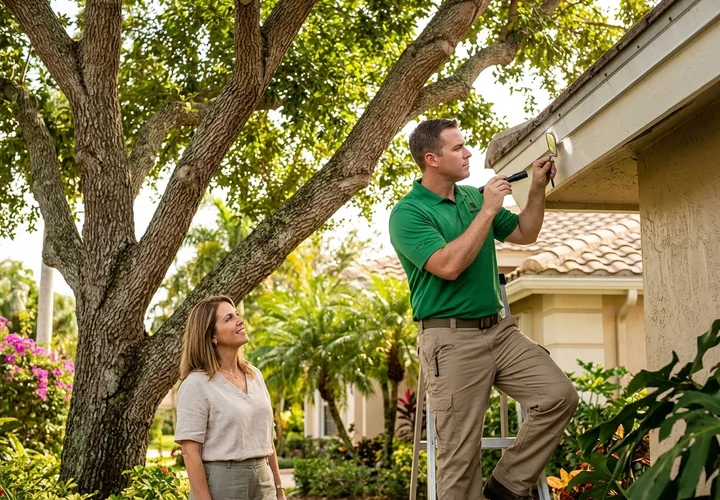
Integrated Pest Management in Lauderhill, FL
Spray treatments eliminate visible insects on contact, then pest populations rebuild from surviving eggs and migrating neighbors within weeks. Lauderhill's dense multi-family housing and older construction create the exact conditions where chemical-only programs produce temporary results and repeat service calls. Integrated pest management addresses entry points, harborage conditions, and food sources alongside targeted chemical application -- reducing pest pressure over time instead of resetting the clock each visit.
- Root-cause assessment including entry points and harborage conditions
- Species-specific treatment based on biology, not a standard spray schedule
- Documentation at every visit for landlords and property managers
- Declining pest pressure across quarters, not just day-of knockdown
Why Lauderhill's Housing Stock Demands a Systems Approach
Lauderhill was developed primarily between the 1960s and 1980s. The multi-family buildings and single-family homes built in that era were constructed before modern pest exclusion standards, with open utility penetrations, unsealed plumbing chases between floors, and wall cavity conditions that accumulate German cockroach and ant harborage over decades. Chemical spray programs that address visible surfaces leave all of that infrastructure intact. Populations rebuild from the same locations within 30 to 60 days.
Integrated pest management treats the system rather than individual insects. That means assessing entry points at the foundation and utility penetrations, identifying moisture conditions that sustain cockroach harborage in cabinet bases, and targeting chemical products at the specific locations where the pest biology is occurring -- not at counter surfaces and doorways where insects are seen but not living.
For Lauderhill apartment buildings, the IPM model is especially valuable because the pest pressure is structural and shared. A single unit with open plumbing chase penetrations is a constant re-introduction source for the entire building. An IPM program documents those conditions and creates a pathway for fixing them, not just treating the symptom repeatedly.
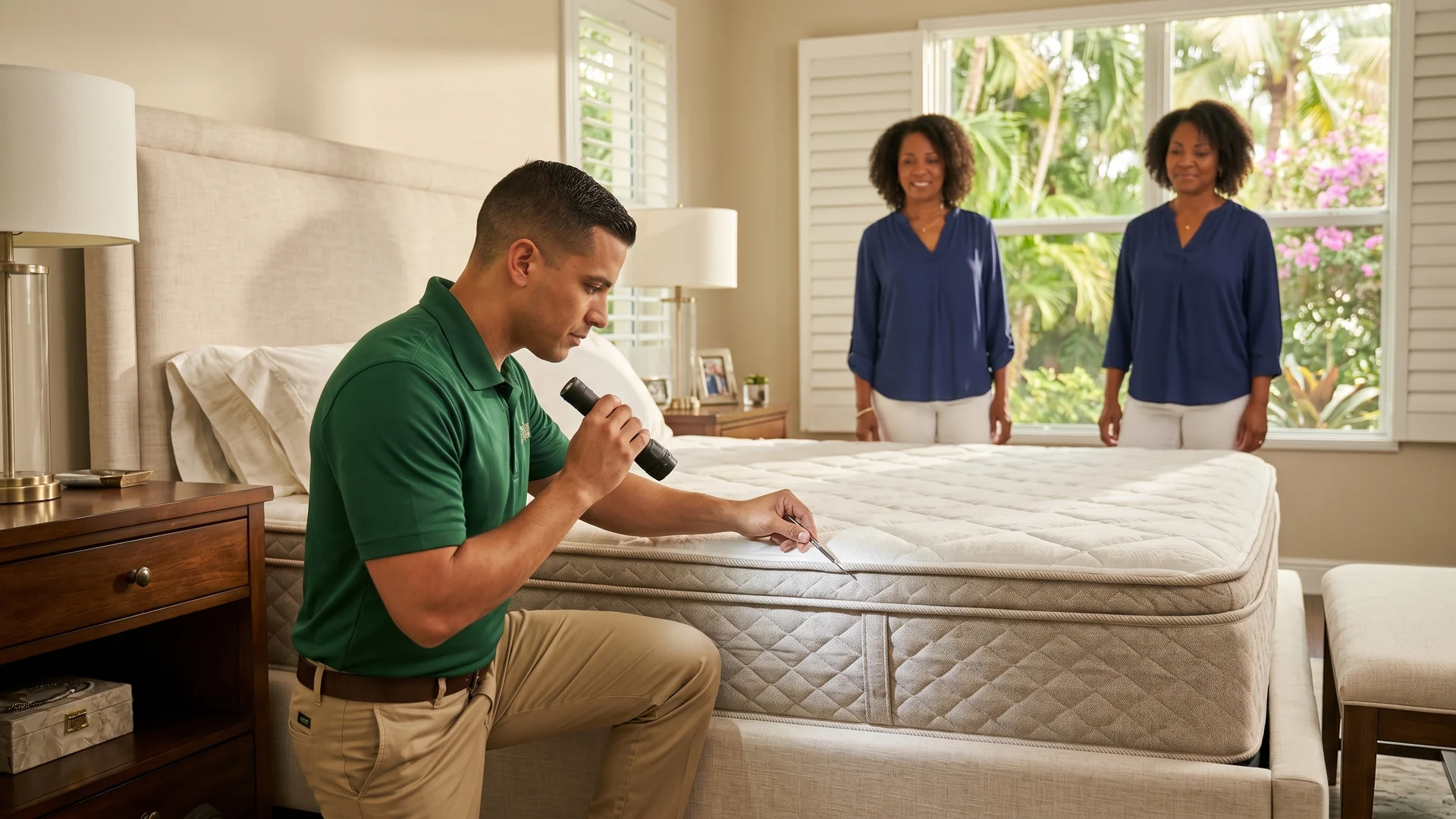
The Bugstinct IPM Process in Lauderhill
Property Assessment and Pest Pressure Mapping
We evaluate your property's specific risk factors: construction age and type, plumbing chase conditions, moisture sources, vegetation contact with the structure, and existing harborage zones. We document what is active and what conditions are sustaining it.
Entry Point Identification and Exclusion
We identify foundation cracks, utility penetrations, sill gaps, and other physical entry points. Exclusion recommendations are made for each site. For apartment buildings, shared-wall penetrations are documented for property manager review.
Species-Specific Treatment at the Source
German cockroaches get gel bait and insect growth regulator in harborage zones -- not broad spray that misses the colony. Ants get non-repellent bait that travels back to the queen. Mosquitoes get larvicide at breeding sources. Each pest species receives the treatment its biology requires.
Population Monitoring Between Visits
Sticky monitoring stations are placed in key zones. Population trends are tracked across visits and documented in the service record. Treatment is adjusted based on actual conditions, not a fixed spray schedule.
Seasonal Adjustments and Documentation
Lauderhill's year-round subtropical climate means pests do not slow down seasonally, but pressure patterns shift. Summer wet season increases mosquito and ant foraging pressure. Treatment emphasis adjusts accordingly, and documentation supports landlords, property managers, and HOA requirements.
Why Chemical-Only Pest Control Fails in Lauderhill's Housing Stock
The Multi-Family Building Problem
Lauderhill has one of the higher concentrations of multi-family housing in Broward County's mid-tier cities. Many of these buildings are four to twelve unit structures built in the 1960s and 1970s with shared plumbing chases, common attic spaces, and interconnected wall cavities. German cockroaches establish harborage in these shared spaces and travel between units through gaps at pipe penetrations. A single unit treated with spray eliminates what is visible in that unit. But the population nesting in the shared chase migrates back within days.
IPM in a multi-family Lauderhill building starts with identifying the shared infrastructure. Bugstinct documents each penetration, maps the likely travel corridors, and coordinates treatment across all affected units when building-level programs are available. When individual unit service is the only option, treatment is targeted at the zones immediately adjacent to shared walls and penetrations -- buying more sustained relief than counter-spray alone.
Older Construction and Established Harborage
Homes and apartments built in the 1960s and 1970s have had 50 to 60 years of pest pressure building in wall voids, cabinet bases, and under-floor spaces. German cockroach populations can establish behind original kitchen cabinetry in levels that surface sprays cannot penetrate. Prior owners or tenants may have created conditions -- stacked cardboard, cluttered storage, moisture from slow plumbing leaks -- that accelerated harborage development.
IPM in older Lauderhill construction begins with a thorough assessment of the harborage conditions before treatment. Gel bait is placed inside the harborage zone, not just on the surface in front of it. IGR is applied to interrupt the reproductive cycle so newly hatched nymphs are not replenishing the population while adult insects are being eliminated.
Year-Round Subtropical Pressure
Lauderhill's climate does not give chemical treatments a seasonal advantage. In northern states, winter slows pest activity and allows residual treatments to hold longer before populations rebuild. In central Broward County, every month is active season. Mosquitoes breed year-round in drainage canal standing water. Ants forage continuously. German cockroaches reproduce without seasonal pause.
IPM accounts for this by maintaining consistent monitoring and adjusting chemical application based on actual pressure rather than calendar assumptions. When mosquito breeding surges in the wet season, larvicide emphasis increases. When cockroach activity peaks in summer heat, harborage gel bait concentration is reviewed. The program adapts to the environment instead of following a fixed schedule.
IPM vs. Chemical-Only Pest Control in Lauderhill
What the difference looks like across a full year of service.
| Comparison | Chemical-Only Spray Programs | Bugstinct IPM Program |
|---|---|---|
| Harborage treatment | Products applied to visible surfaces; wall void and plumbing chase harborage remains active and replenishes population | Gel bait and IGR placed directly in identified harborage zones; colony eliminated at the source |
| Entry point management | Entry points left open; pest pressure continuously replenished from outdoor population and neighboring units | Entry points documented; exclusion recommendations made and implemented where accessible |
| Treatment basis | Fixed spray schedule regardless of actual pest pressure; product applied whether needed or not | Population monitoring guides treatment; product applied when conditions and thresholds indicate need |
| Multi-family buildings | Individual unit treatment only; shared infrastructure conditions ignored | Shared plumbing and wall conditions documented; building-level programs available for multi-unit coordination |
| Long-term trend | Consistent cycle of knockdown and rebound; same species returning month after month | Declining pest pressure across quarters as entry points are addressed and colony-level treatment reduces harborage populations |
Pest Management FAQs for Lauderhill Residents
What is integrated pest management and how is it different from regular pest control?
Our apartment building has roaches that keep coming back after treatment. Would IPM help?
How long does it take to see results with IPM?
Does IPM cost more than standard spray service?
Can IPM handle the ants coming in from my yard in Lauderhill?
I am a property manager with multiple Lauderhill units. Can Bugstinct set up an IPM program for the whole building?
IPM Capabilities for Lauderhill Properties
Science-based pest management tools for Lauderhill's specific housing and climate conditions.
Entry Point Exclusion
Foundation crack assessment, utility penetration documentation, and physical exclusion for residential and multi-family properties.
Moisture Source Assessment
Under-sink plumbing, gutter drainage, and standing water evaluation to eliminate the moisture conditions that sustain cockroach and ant harborage.
IGR Application
Insect growth regulator breaks the reproductive cycle for cockroaches, stored-product insects, and other species in harborage zones, preventing population rebound.
Population Monitoring
Sticky monitor placement and trend tracking across service visits to guide threshold-based treatment decisions.
Multi-Unit Programs
Coordinated building-level IPM for Lauderhill apartment buildings with shared plumbing infrastructure and adjacent unit pest transmission.
Service Documentation
Per-unit service records documenting findings, treatments applied, and structural recommendations for landlords and property managers.
Why Lauderhill Residents Choose Bugstinct for Pest Management
Local Housing Expertise
We understand Lauderhill's multi-family building stock, older construction conditions, and the shared-infrastructure dynamics that make simple spray programs ineffective for sustained results.
Genuine Long-Term Pest Reduction
IPM clients see declining pest activity across quarters as colony-level treatment and entry point exclusion produce cumulative results -- not just day-of knockdown followed by rebound.
Landlord and Compliance Documentation
Every visit produces a documented service record. Property managers gain a paper trail for tenant disputes, rental compliance requirements, and property inspection preparation.
Targeted Chemistry, Lower Exposure
Targeted applications in harborage zones reduce household and building chemical exposure compared to broadcast perimeter sprays on a fixed schedule.
Lauderhill Pest Services
Start a Real Pest Management Program in Lauderhill
Chemical spray cycles do not resolve the structural and harborage conditions driving pest activity in Lauderhill's multi-family buildings and older homes. Bugstinct's integrated approach does. Schedule your free IPM assessment today.