What Do Wolf Spiders Look Like?
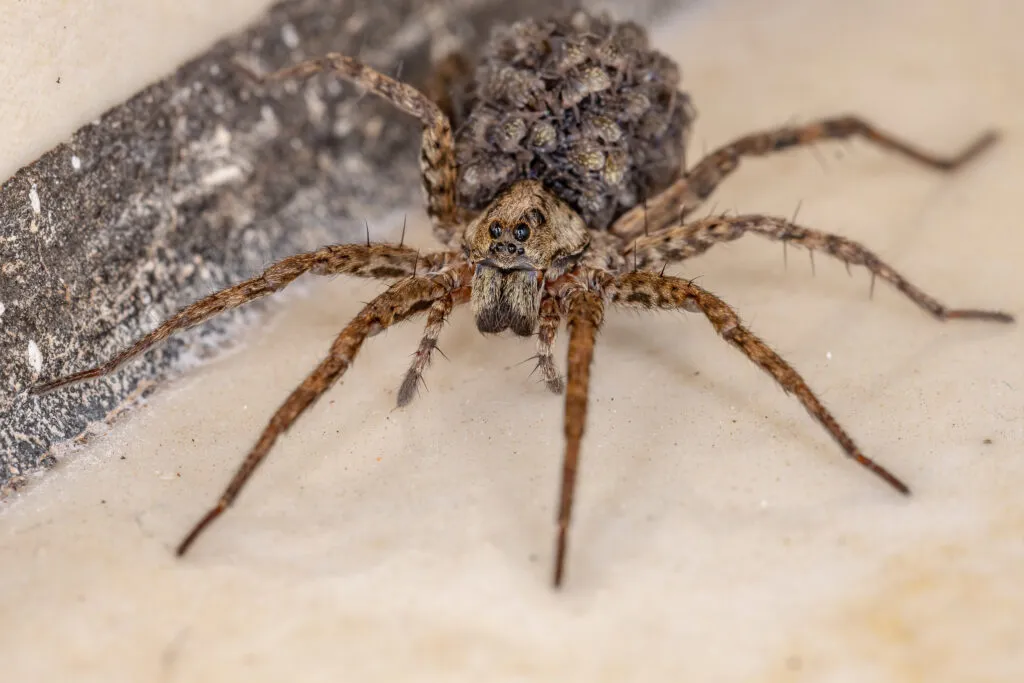
Wolf spiders are among the most recognizable spiders in South Florida. Knowing what they look like helps you distinguish them from more concerning species.
- Brown, gray, or black coloring with mottled or striped patterns across the body.
- A hairy body and legs that give them a rugged, intimidating appearance.
- Eight eyes arranged in three distinctive rows - four small eyes on the bottom row, two medium eyes in the middle, and two large eyes on top.
- Their eyes reflect light at night (called eye shine), which is often how homeowners first spot them.
How Big Do They Get?
Wolf spiders are larger than most household spiders, which is part of why they startle people.
- Body size: half an inch to over an inch in length.
- With legs extended: two or more inches across - large enough to be clearly visible on floors and walls.
What Do Wolf Spiders Eat?
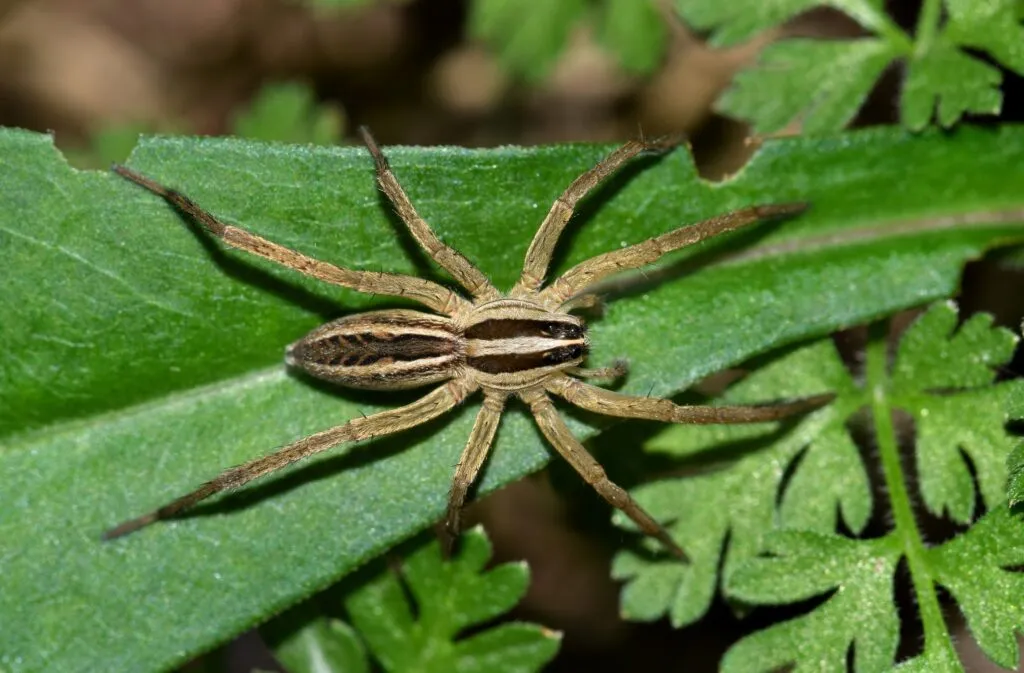
Wolf spiders are active hunters, not web builders. They chase down their prey on the ground, making them effective pest controllers in their own right.
- Their diet includes ants, beetles, cockroaches, crickets, flies, and mosquitoes.
- They are active hunters that chase down prey rather than building webs to catch it.
- They are actually beneficial - they reduce populations of pest insects around your home.
Can Wolf Spiders Bite?
Yes, wolf spiders can bite, but they strongly prefer to flee rather than fight.
- Bites are rare and only happen when the spider is trapped or directly provoked.
- Wolf spiders are not aggressive toward humans and will run away when given the chance.
Are They Venomous?
Technically yes, but wolf spider venom is not medically significant to humans.
- Bite effects are limited to mild redness and swelling that resolves quickly on its own.
- Wolf spiders are not a health threat to humans or pets.
- No medical treatment is typically needed unless an allergic reaction occurs.
Where They Live in Broward County
Wolf spiders are common throughout Broward County. Understanding where they prefer to live helps you manage encounters.
- Mulch beds and leaf litter in landscaped areas around the home.
- Under rocks and landscape features where they can hide during the day.
- Garages, sheds, and pool equipment areas that provide shelter and attract insects.
- Pool decks - they are attracted by the insects drawn to outdoor lighting.
- They occasionally wander indoors through gaps in doors, windows, and foundations.
Why You See More in Fall
If you've noticed more wolf spiders inside your home during autumn, there's a straightforward explanation.
- Temperature and precipitation shifts drive insects indoors as conditions change.
- Wolf spiders follow their prey inside - where the bugs go, the spiders go.
- Peak sighting season runs from October through December in South Florida.
Prevention Tips
A few simple steps can significantly reduce wolf spider activity around and inside your home.
- Remove clutter from floors and storage areas to eliminate hiding spots.
- Vacuum regularly, especially corners and under furniture where spiders shelter.
- Keep firewood stored away from the house - woodpiles are prime spider habitat.
- Trim shrubs and vegetation away from foundations to reduce harborage areas.
- Install door sweeps on all exterior doors to block entry at ground level.
- Reduce outdoor lighting that attracts the insects wolf spiders hunt.
Are Wolf Spiders Dangerous?
The short answer: no. Wolf spiders are not dangerous to humans or pets.
- They don't cause structural damage to your home.
- They don't transmit diseases.
- They are generally beneficial predators that help keep other pest populations in check.
- Their presence often indicates a healthy ecosystem around your property.
When to Call a Professional
While wolf spiders are harmless, there are situations where professional help makes sense.
- Frequent wolf spider sightings inside the home, particularly in living spaces.
- Spiders appearing in bedrooms or living areas where you want to feel comfortable.
- An increase in other insects - spiders follow their food, so more spiders often signals a broader pest issue.
- You want peace of mind and professional prevention to keep your home spider-free.
Bugstinct: Your Broward County Spider Experts
Whether you're dealing with wolf spiders or any other species, Bugstinct provides thorough inspection and targeted treatment to keep your Broward County home comfortable and pest-free. Our team understands local spider behavior and uses proven methods to deliver lasting results.