Integrated Pest Management for South Florida Homes
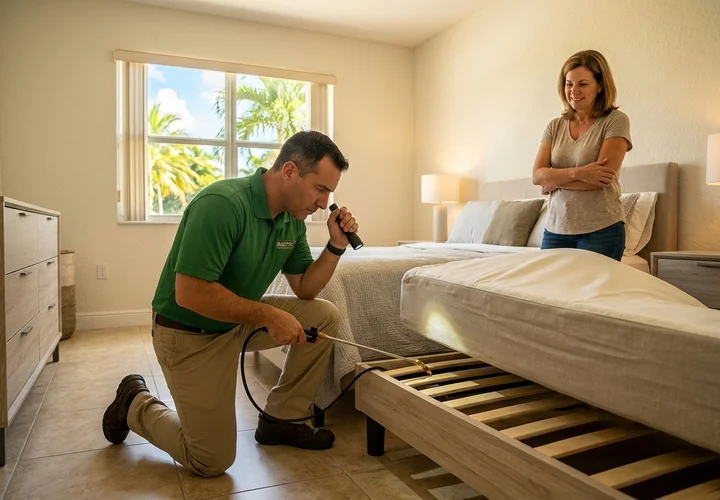
IPM uses inspection, prevention, monitoring, and targeted treatment to solve pest problems with less reliance on chemical application alone. Bugstinct brings this science-backed approach to Broward, Miami-Dade, and Palm Beach County homeowners.
- Root-cause identification, not just symptom treatment
- Reduced chemical exposure for families and pets
- Prevention-first strategy that stops infestations before they start
- Combined with targeted treatment when needed
What Is Integrated Pest Management — and Why Does It Matter in Florida?
Integrated Pest Management (IPM) is a structured approach to pest control that combines biological knowledge, physical barriers, environmental modification, and targeted pesticide application only where and when needed. Unlike a standard spray schedule, IPM starts with understanding why pests are present before deciding how to address them.
In South Florida, IPM is not just a philosophy — it is a practical necessity. The subtropical climate creates year-round pest pressure from dozens of species simultaneously. An IPM program accounts for that complexity: identifying which pests are active, what conditions support them, and which combination of interventions will produce lasting results rather than temporary suppression.
Bugstinct applies IPM principles across all of its pest management services — from the initial free inspection that maps entry points and conducive conditions, to the product selection that prioritizes targeted, low-impact treatments before broad chemical application.
The IPM Process: How Bugstinct Applies It
Every pest management program follows this four-step cycle.
Inspect and Identify
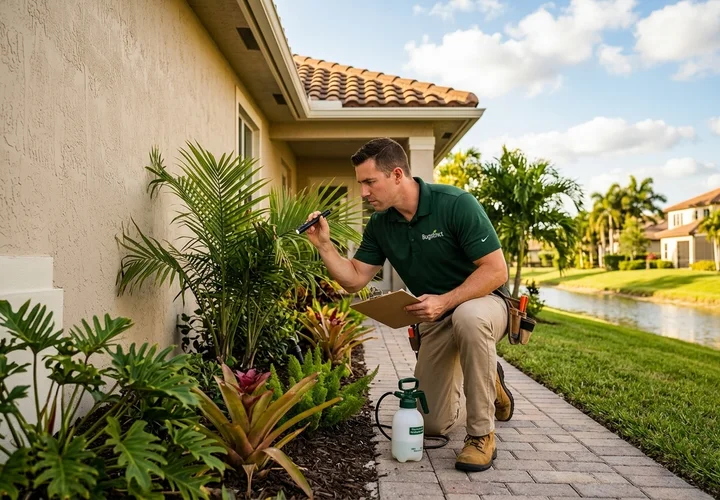
We start with a thorough inspection — exterior foundation, roofline, landscaping, entry points, and interior harborage zones. Correct identification of pest species determines every decision that follows.
Set Action Thresholds
Not every insect sighting requires chemical treatment. We assess whether pest levels actually warrant intervention and set a threshold that justifies treatment based on species, population, and risk.
Apply Least-Impact Methods First
Physical exclusion, sanitation recommendations, habitat modification, and monitoring come before chemical application. When treatment is needed, we select the most targeted product with the smallest possible impact on non-target species.
Monitor and Adjust
IPM is not a one-visit solution. We monitor results, track whether conditions change, and adjust the program based on what is actually happening in your home — not a rigid spray calendar.
Understanding Pest Management in South Florida
Why Florida's Climate Requires a More Intelligent Approach
South Florida does not experience the seasonal pest die-off that slows pest pressure in cooler climates. Mosquito breeding, ant colony expansion, cockroach reproduction, and termite swarming continue across all twelve months. A pest management program designed for Florida must account for year-round biological activity, not just respond to seasonal peaks.
Humidity, standing water from irrigation systems and rainfall, landscaping that contacts the structure, and gaps in aging construction all create what pest professionals call 'conducive conditions' — environmental factors that make infestation easier and recurrence more likely. IPM addresses these conditions alongside the pests themselves.
The Role of Exclusion in Effective Pest Management
Chemical treatments address existing populations. Exclusion prevents the next population from entering. Bugstinct technicians identify and document structural vulnerabilities — gaps in siding, deteriorated door sweeps, open utility penetrations, unsealed weep holes — during every inspection. Where these can be sealed during the service visit, we address them. For larger structural repairs, we provide documentation the homeowner can act on.
Effective exclusion is the reason recurring plan customers experience dramatically fewer reinfestations over time. The perimeter barrier created by monthly treatment is reinforced by physical barriers that reduce the entry rate independent of chemical activity.
When Chemical Treatment Is the Right Tool
IPM does not mean avoiding pesticides — it means using them precisely and proportionally. When an active infestation is present or when non-chemical methods alone are insufficient, targeted chemical application is the right tool. The goal is to match the product to the pest and the situation: non-repellent bait for ghost ants, gel bait and IGR for German cockroaches, soil treatment for subterranean termites.
At Bugstinct, product selection follows the pest and the location, not a default spray schedule. Exterior perimeter products are chosen for outdoor conditions and non-target impact. Interior treatments use the smallest effective application format — gel bait, crack-and-crevice treatment, and targeted spot application rather than broad interior fogging.
IPM vs. Conventional Spray-Schedule Pest Control
Two approaches to the same problem — very different outcomes over time.
| Comparison | Conventional Spray Schedule | Bugstinct IPM Program |
|---|---|---|
| Starting point | Fixed schedule regardless of actual pest pressure | Inspection and pest identification before any treatment decision |
| Treatment selection | Same product rotation applied to all customers | Species-specific product matched to confirmed pest and location |
| Chemical use | Broad application on every visit | Targeted application only when intervention threshold is met |
| Exclusion work | Rarely included — focused on chemical application | Documented and addressed as part of the service protocol |
| Long-term results | Ongoing suppression without reducing conducive conditions | Declining pest pressure over time as root causes are addressed |
Pest Management Questions — Answered
What is the difference between pest management and pest control?
Is IPM more expensive than conventional pest control?
How long does it take for an IPM program to show results?
Does IPM still use pesticides?
Can you apply IPM principles to commercial properties?
What pest management services does Bugstinct offer?
What Bugstinct's Pest Management Program Includes
Every component works together as a system.
Initial Property Inspection
Full interior and exterior assessment mapping pest entry points, harborage zones, and conducive conditions.
Physical Exclusion
Identification and where possible sealing of structural gaps, deteriorated sweeps, and utility penetrations.
Environmental Modification Guidance
Recommendations on landscaping, irrigation, debris removal, and storage practices that reduce pest habitat.
Population Monitoring
Monitoring stations, sticky traps, and follow-up assessment to track pest pressure between service visits.
Targeted Chemical Treatment
Species-specific product selection applied precisely at harborage zones, entry points, and travel paths.
Service Documentation
Written record of every inspection finding, product applied, and recommendation — available to the homeowner after each visit.
The Practical Benefits of an IPM Approach
For South Florida homeowners who want lasting results, not a spray dependency.
Declining Pest Pressure Over Time
IPM programs reduce the conditions that sustain pest populations, producing fewer infestations over successive months — not just temporary suppression.
Reduced Environmental Impact
By reserving chemical application for situations where it is actually warranted, IPM minimizes impact on pollinators, soil biology, and non-target insects.
Structural Protection
Exclusion work and monitoring protect the physical structure of your home in addition to controlling pest populations — preventing damage, not just addressing it.
Transparent Process
IPM requires explaining what was found, what was applied, and why. Every Bugstinct service visit includes a full debrief from the technician.
Related Services and Topics
Start a Smarter Pest Management Program
Free inspection included. Broward, Miami-Dade, and Palm Beach counties. Most appointments available within 24 to 48 hours.