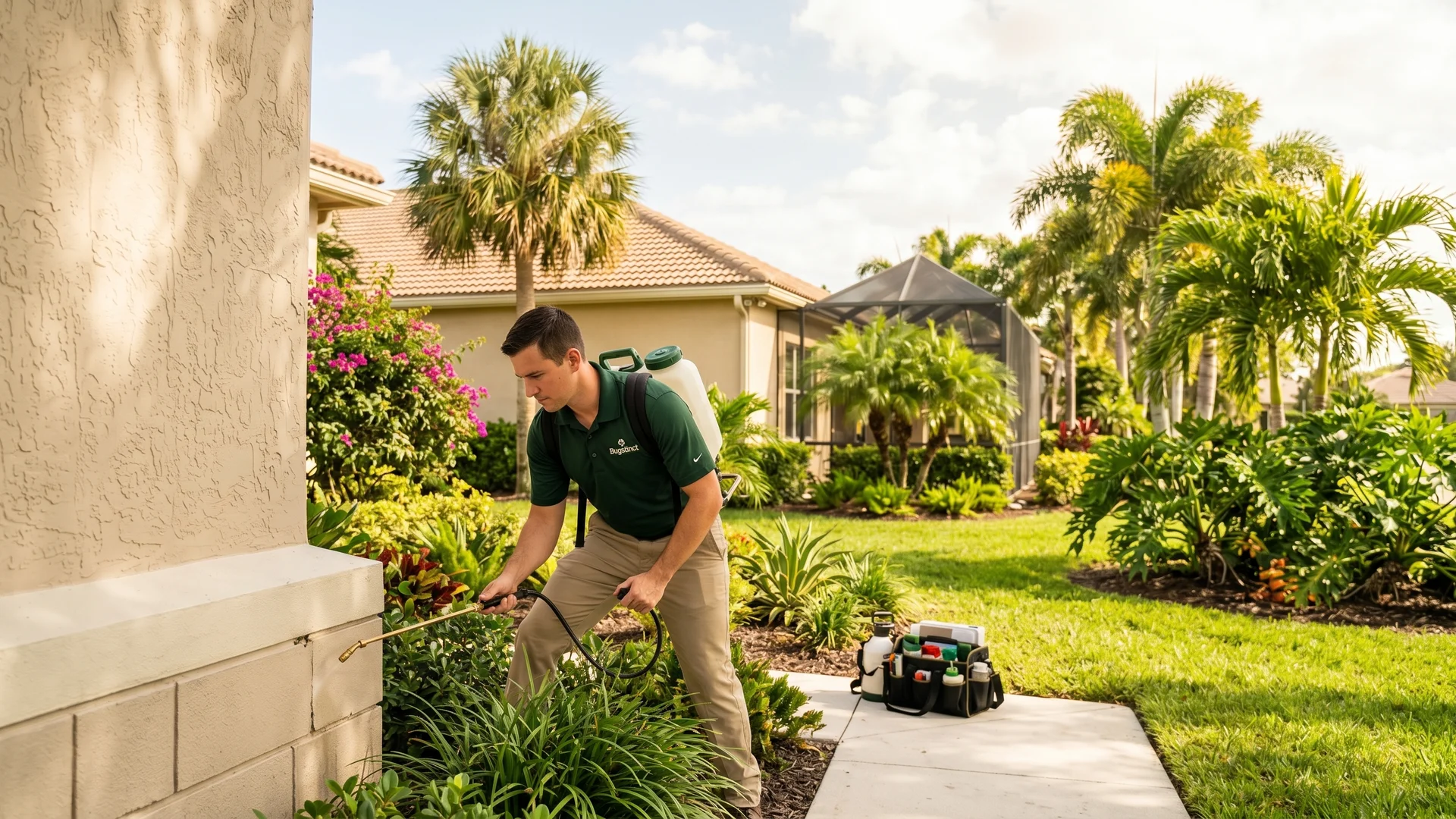
Cockroach Control Guide -- German Roach, Palmetto Bug, and Why Spray Fails
South Florida homeowners deal with two fundamentally different cockroach problems that require opposite treatment approaches. German roaches are a kitchen pest that lives inside appliances and cabinet voids -- and responds to gel bait, not spray. Palmetto bugs and American roaches are outdoor species that enter through perimeter gaps -- and require exclusion and barrier treatment, not indoor spray. Using the wrong treatment for the species guarantees the infestation continues. This guide explains the difference and what effective control actually looks like.
- How to identify German roaches vs palmetto bugs vs American roaches
- Why repellent sprays make German roach infestations worse
- How gel bait and IGR programs eliminate cockroach colonies
- What to do before and after professional cockroach treatment
The Two Cockroach Problems in South Florida
Florida has more than 70 cockroach species, but South Florida homeowners deal predominantly with three: German cockroaches (the kitchen pest), American cockroaches (also called palmetto bugs), and Florida woods cockroaches (also called palmetto bugs). Each has a completely different behavior pattern, harborage preference, and treatment requirement.
German cockroaches are the species most commonly associated with kitchen infestations in South Florida. They are small (about half an inch), light brown with two dark stripes, and almost exclusively indoor-living. They establish colonies inside appliances -- in the refrigerator motor cavity, the dishwasher underside cavity, and cabinet hinge spaces. They reproduce extremely rapidly: a single German roach female produces six to eight egg cases in her lifetime, each containing 30 to 40 eggs.
American cockroaches and Florida woods cockroaches (palmetto bugs) are large (1.5 to 2 inches), dark brown, and primarily outdoor species that enter homes opportunistically through gaps at the foundation perimeter, soffit vents, and weep holes. They are not kitchen colonizers in the way German roaches are -- they travel indoors from outside and return to exterior harborage. This difference in behavior requires a completely different treatment approach.
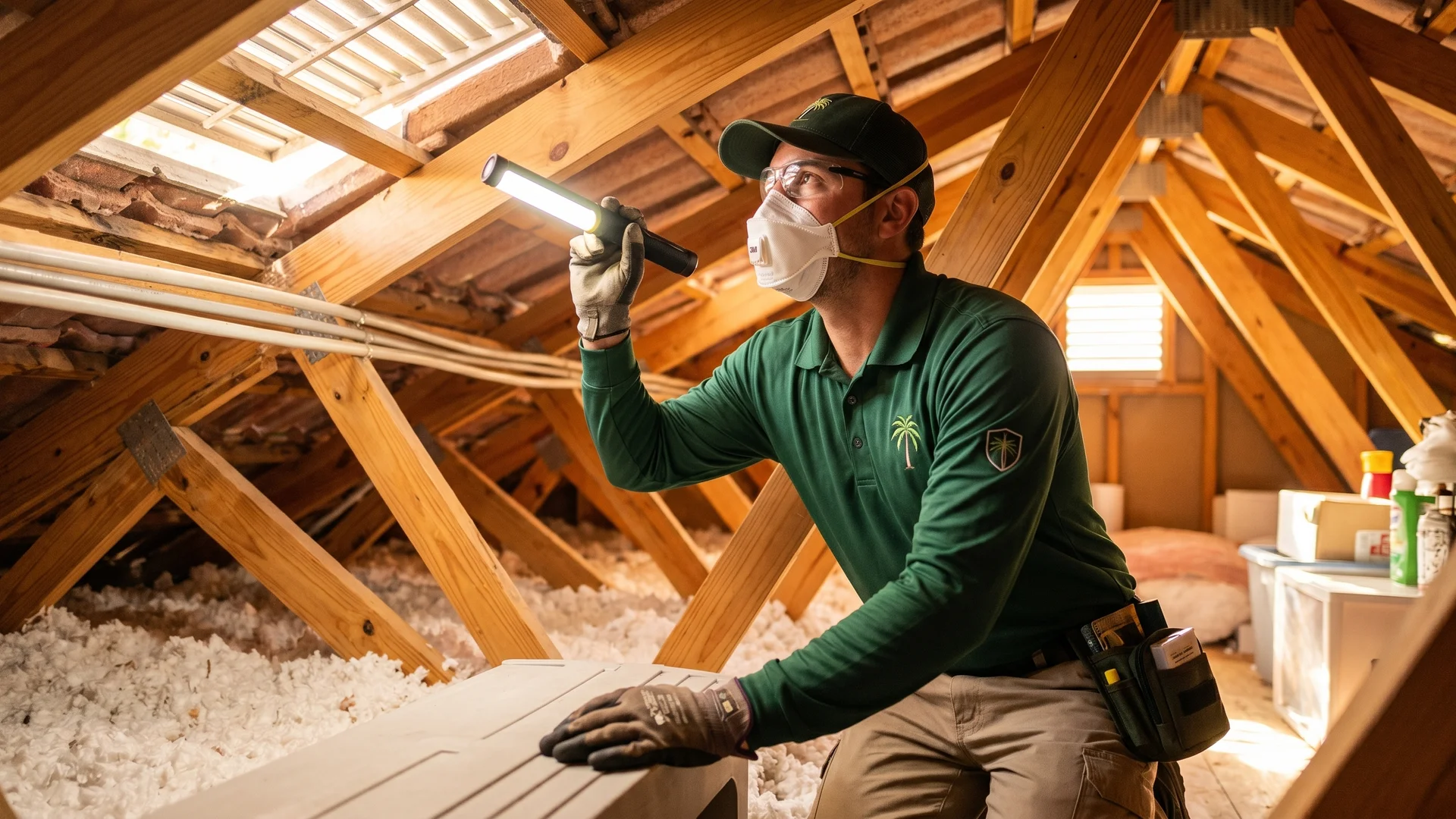
How Professional Cockroach Control Works by Species
Treatment is species-specific -- the approach for German roaches and palmetto bugs is fundamentally different.
Species Identification Before Treatment
A licensed technician inspects the kitchen, utility areas, and exterior perimeter to confirm the cockroach species, map harborage zones, and identify entry points. Applying the wrong product for the identified species -- spray for German roaches, for example -- makes the infestation harder to eliminate.
German Roach Protocol -- Gel Bait and IGR
For German roach infestations: gel bait is applied at all confirmed harborage zones (refrigerator motor cavity, dishwasher underside, cabinet hinges, wall void behind stove). An IGR is applied throughout the kitchen to prevent egg cases from hatching. No broad spray in the kitchen -- repellent products cause German roaches to scatter and spread.
Palmetto Bug Protocol -- Perimeter and Exclusion
For palmetto bugs and American roaches: exterior perimeter barrier treatment creates a residual zone that eliminates roaches before they enter. Weep holes, soffit vents, utility penetrations, and door frame gaps are sealed to eliminate physical entry points. Interior spot treatment is applied at confirmed indoor entry locations.
Follow-Up and Monthly Maintenance
A 10 to 14-day follow-up confirms German roach population reduction. Monthly service maintains the exterior barrier for palmetto bugs and inspects kitchen harborage zones for any German roach re-establishment. The 30-day guarantee covers both species on every service.
Why Cockroach Sprays Fail -- and What Works Instead
Why Repellent Spray Makes German Roach Infestations Worse
Consumer cockroach sprays are almost universally repellent -- they contain chemicals that cockroaches detect and avoid. When a German roach population encounters a repellent spray in the kitchen, the colony does not die; it relocates. Workers carrying the chemical signal communicate danger to the rest of the colony, and the population retreats deeper into wall voids, appliance motor cavities, and other inaccessible spaces. The spray application temporarily reduces visible activity while the population entrenches further into the structure.
This is why homeowners who apply repellent spray to German roach trails on the kitchen counter often see roaches appear behind the refrigerator or inside the cabinet above the stove within a week. The colony moved -- it did not die. The correct product for German roach elimination is non-repellent gel bait, which workers actively carry back to the colony and share with nest mates, including the reproductive adults that consumer spray never reaches.
- Repellent spray causes German roaches to relocate deeper into the structure
- Non-repellent gel bait is carried back to the colony and shared with nest mates
- IGR application prevents egg cases from hatching after initial colony elimination
- Without IGR, German roach populations rebound from surviving egg cases within 2 to 3 weeks
The IGR Factor -- Why Treatments Fail Without It
German cockroach egg cases (oothecae) are resistant to the same contact-kill products that eliminate adult and nymph roaches. An egg case contains 30 to 40 eggs and takes 28 to 30 days to hatch. A treatment that eliminates the active adult and nymph population but does not address the egg cases leaves behind a population that will begin hatching within three to four weeks of the initial service.
Insect growth regulators (IGRs) disrupt the development process of insect eggs and nymphs -- preventing hatching and preventing nymphs from developing into reproductive adults. Applied throughout the kitchen and harborage areas alongside gel bait, IGR is what prevents the reappearance cycle that leads homeowners to believe cockroach problems cannot be permanently resolved. They can be -- but IGR application is a required component of any effective German roach program.
German Roach Treatment vs. Palmetto Bug Treatment
| Comparison | German Roach Protocol | Palmetto Bug Protocol |
|---|---|---|
| Primary harborage | Interior: appliance cavities, cabinet voids, wall voids near kitchen | Exterior: landscaping, mulch beds, outdoor debris; enters indoors opportunistically |
| Treatment location | Interior kitchen harborage zones -- gel bait at contact points | Exterior perimeter barrier and entry point exclusion |
| Product type | Non-repellent gel bait plus IGR -- never repellent spray indoors | Residual barrier spray at perimeter plus exclusion sealing |
| Entry point sealing | Kitchen utility gaps and plumbing penetrations | Weep holes, soffit vents, door frames, and foundation gaps |
| Reinfestation risk | Re-establishment from egg cases if IGR is not applied | Re-entry from exterior if barrier and exclusion are not maintained monthly |
Cockroach Control Guide -- Frequently Asked Questions
How do I know if I have German roaches or palmetto bugs?
Can I use spray to get rid of German roaches?
How long does it take to get rid of German roaches?
Why do palmetto bugs keep coming into my home?
Do I need to prepare my kitchen before cockroach treatment?
Key Facts About Cockroach Control in South Florida
What every South Florida homeowner should know before treating for cockroaches.
German Roach Harborage
German roaches live in the refrigerator motor cavity, dishwasher underside, cabinet hinges, and wall voids near the kitchen -- not on the counter surface where spray is typically applied.
Gel Bait Mechanism
Non-repellent gel bait attracts foraging German roaches who carry the active ingredient back to the colony, eliminating nest mates and reproductive adults that spray cannot reach.
IGR Stops Hatch Cycle
IGR prevents German roach egg cases from hatching after initial treatment -- without it, populations rebound from surviving egg cases within two to three weeks.
Palmetto Bug Entry Points
Florida woods and American roaches enter through weep holes, soffit vents, door frame gaps, and utility penetrations. Sealing these gaps is as important as barrier spray.
No Broad Spray in Kitchens
Broadcast spray in kitchens scatters German roach colonies deeper into the structure. Any German roach treatment that does not use gel bait is using the wrong protocol.
Monthly Maintenance Prevents Return
Monthly service maintains the exterior barrier for palmetto bugs and inspects kitchen zones for German roach reestablishment before populations grow large.
What Correct Cockroach Treatment Delivers
When the right protocol is applied for the right species, cockroach infestations are fully resolvable.
Colony-Level Elimination
Gel bait reaches the colony source -- including the reproductive adults and egg cases that surface spray never contacts. The infestation resolves from the source, not just the visible surface.
Guaranteed Results
Professional cockroach treatment with the correct protocol carries a 30-day guarantee. If roaches return within that window, re-treatment is provided at no charge.
Dramatic Reduction Within 10 Days
Most German roach infestations treated with gel bait and IGR show 80% or greater reduction in visible activity within the first week of treatment.
Less Total Product Use
Targeted gel bait application at harborage zones uses far less total product than broadcast spray applications -- and is more effective. Precision treatment is better treatment.
Related Cockroach Control Resources
Cockroaches in Your Home? Get the Right Treatment.
Bugstinct uses species-matched cockroach control -- gel bait and IGR for German roaches, perimeter exclusion for palmetto bugs. 30-day guarantee. Same-week appointments.