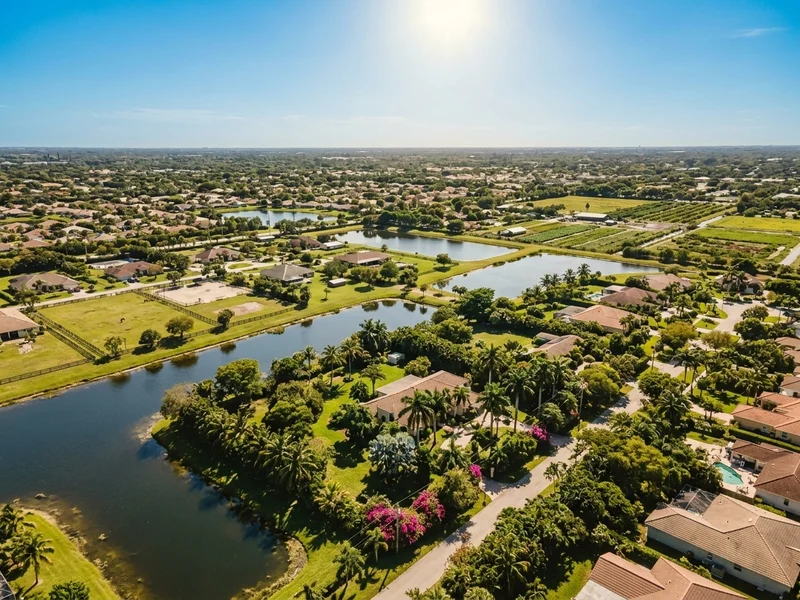
Pest Management vs. Exterminator -- Prevention vs. Reaction in South Florida
Calling an exterminator resolves the current infestation. Starting a pest management program prevents the next one. For South Florida homes with recurring pest pressure, the choice between these two approaches determines whether the same pest problem returns every season -- or stops returning. This comparison examines when each approach is appropriate and what the total cost difference looks like over 12 months.
- When reactive extermination is the right first call
- When a pest management program prevents more than it costs
- How total annual cost compares between the two approaches
- How to combine both effectively after a new infestation
The Core Difference -- Reaction vs. Prevention
Reactive extermination and pest management programs have the same license, the same products, and often the same technicians. The difference is in when they are called and what they are designed to accomplish. Extermination is designed to resolve an active infestation. A pest management program is designed to prevent infestations from establishing in the first place.
In most US pest markets, homeowners can reasonably cycle between reactive exterminator calls when pest problems appear and go without service otherwise. South Florida's subtropical climate makes this cycle significantly more expensive -- because pest populations do not decline seasonally, the conditions that supported the last infestation persist year-round, and new infestations establish faster than in seasonal climates.
This comparison examines the two approaches across the dimensions that matter most for South Florida homeowners: effectiveness over time, total annual cost, and the situations where each approach is the right choice.
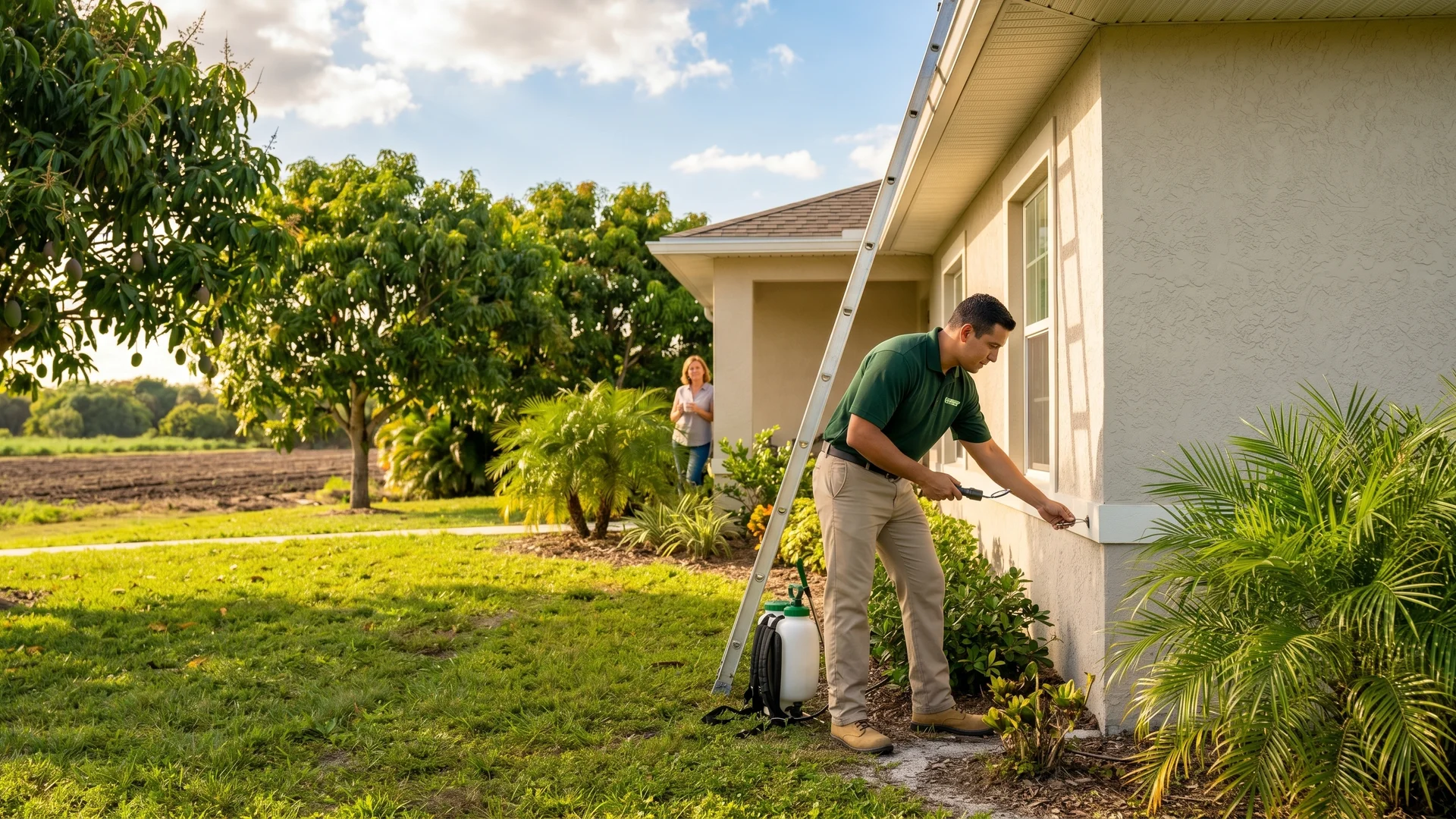
How Each Approach Works for South Florida Homeowners
The service mechanics of reactive extermination and IPM-based pest management compared.
Reactive Extermination -- How It Works
You call when pest activity becomes visible or severe. A licensed technician visits, inspects, and applies species-targeted treatment. A follow-up at 7 to 14 days confirms resolution. A 30-day guarantee covers re-treatment if pests return within that window. After the guarantee period, no ongoing protection is provided.
Pest Management Program -- How It Works
An initial property assessment documents pest activity, entry points, and conducive conditions. Monthly visits include monitoring, treatment adjustment, entry sealing, and barrier renewal. Early pest activity is caught and addressed before populations establish. The program matures over three to six months as exclusion accumulates.
The First Year -- Where the Cost Difference Emerges
A home on reactive exterminator visits for recurring pest pressure may require two to four targeted service calls in a 12-month period. A home on monthly pest management service has one predictable monthly rate with no additional emergency call costs. The total annual cost comparison often favors monthly management for homes with year-round pest pressure.
The Best Combination -- Extermination First, Management After
Many South Florida homeowners start with a targeted extermination visit to resolve an active infestation, then transition to monthly pest management to prevent the next one. This is often the most efficient approach: address the immediate problem with species-targeted treatment, then prevent recurrence with ongoing monitoring and barrier maintenance.
When Each Approach Is the Better Investment
When Reactive Extermination Is the Right Investment
Reactive extermination is the right investment for specific, isolated pest situations that do not reflect ongoing property risk: a wasp nest appearing at a new construction entry point, a German roach infestation in a newly rented property, rats entering through a gap created by a recent renovation, or bed bugs introduced from hotel travel. These situations require targeted elimination -- the event is singular, not cyclical.
Properties with no prior pest history and no recurring conducive conditions (established moisture problems, heavy HOA landscaping contact, mature tree canopy over the roofline) may do well with reactive extermination for occasional events without transitioning to ongoing service.
When Pest Management Is the Better Long-Term Investment
Pest management is the better investment for South Florida homes with recurring general pest pressure -- ghost ants cycling seasonally from irrigated HOA landscaping, palmetto bugs re-entering through foundation and soffit gaps, or German roach recolonization risk from adjacent multi-family units. If the same pest returns within six months of an extermination visit, the underlying conditions support ongoing population pressure that reactive treatment does not address.
The math favors monthly management when two or more reactive extermination calls per year would otherwise be needed. A monthly program at a predictable rate replacing two targeted service calls per year typically costs the same or less -- while maintaining continuous protection between visits.
Pest Management vs. Exterminator -- Full Comparison
| Comparison | Reactive Exterminator | Pest Management Program |
|---|---|---|
| Service timing | Called after pest activity becomes a problem | Proactive monthly visits before activity establishes |
| Between-visit protection | 30-day barrier; no protection after guarantee period ends | Continuous monthly barrier with monitoring between visits |
| Monitoring | None | Glue boards and visit notes track pest pressure trends |
| Exclusion work | Sometimes included in targeted service | Entry point sealing at each visit |
| Right for isolated infestation events | Yes -- targeted elimination for a specific event | Yes -- combined with initial targeted treatment |
| Annual cost with recurring pests | Higher -- two to four service calls per year adds up | Lower or comparable -- predictable monthly rate, fewer emergency calls |
Pest Management vs. Exterminator -- Comparison Questions Answered
If extermination works, why would I need a pest management program?
Is a pest management program worth the monthly cost?
Can I start with an exterminator visit and then switch to a management program?
What pests does a pest management program cover that extermination does not?
How does pest management perform better over time than repeated extermination?
What Each Approach Provides -- Quick Reference
Side-by-side features of reactive extermination and ongoing pest management service.
Reactive Extermination Provides:
Targeted species-specific treatment of active infestation. 30-day guarantee with free re-treatment. One to two visit resolution for most situations. Appropriate for isolated, non-recurring events.
Pest Management Program Provides:
Continuous monthly exterior barrier. Between-visit monitoring with glue boards. Protocol adjustment based on monitoring data. Progressive exclusion work at each visit. 30-day guarantee plus proactive next-visit protection.
Annual Cost -- Exterminator
Variable: two to four service calls per year for recurring pests, each at individual service rates, plus emergency calls outside the guarantee window.
Annual Cost -- Management Program
Predictable monthly rate covering all covered pest species, monitoring, exclusion, and guarantee. Lower total annual cost for homes with recurring pest pressure.
Why Pest Management Builds Value Over Time That Extermination Does Not
The prevention dividend compounds as monitoring and exclusion accumulate.
Improving Results Each Month
Pest management programs improve as exclusion accumulates and monitoring baselines grow. At month six, the program is more effective per visit than at month one. Extermination restarts from zero each time.
Fewer Emergency Situations
Monthly monitoring catches early activity before it becomes an infestation. Fewer emergency calls, fewer surprise costs, and fewer disruptions compared to a reactive-only approach.
Lower Total Annual Spend
For homes with recurring pest pressure, the predictable monthly rate plus zero emergency calls typically costs less over 12 months than two to four reactive service calls plus any emergency callback costs.
Less Chemical Use as Prevention Builds
Progressive exclusion work reduces the number of pest entry points that require chemical barrier treatment. A well-managed home at month 12 requires less product per visit than at month one.
Related Pest Control Comparison Resources
Ready to Move From Reactive Extermination to Ongoing Prevention?
Bugstinct provides both targeted extermination and IPM-based monthly pest management for South Florida homes. 30-day guarantee. Same-week scheduling.