
Pest Management in Broward County, FL
Reactive spraying keeps pests down temporarily. Integrated pest management keeps them out permanently. Bugstinct's Broward County pest management programs combine inspection, prevention, and targeted treatment for lasting results.
- Integrated Pest Management (IPM) protocols — not blanket spraying
- Addresses the source, not just the symptom
- Monthly service with ongoing monitoring and adjustments
- Licensed Florida pest management professionals
What Pest Management Actually Means in Broward County
Pest management is not the same as pest control. The distinction matters. Traditional pest control typically means applying a pesticide when pests appear, then waiting for the next problem. Pest management — specifically integrated pest management, or IPM — is a structured, evidence-based approach that combines inspection, identification, prevention, and targeted treatment to reduce pest populations over time while minimizing pesticide use.
In Broward County, effective pest management must account for the subtropical climate that keeps insects and rodents active year-round, the canal and water systems that create constant mosquito and ant breeding habitat, and the building conditions common in South Florida — crawl spaces, concrete block construction, and dense landscaping that creates entry and harborage points. A generic spray schedule does not address these variables. A proper pest management plan does.
Bugstinct's Broward County pest management service is built on the IPM model: inspect first, identify the species and conditions contributing to the problem, apply the minimum effective treatment to the correct locations, monitor results over time, and adjust the plan as pest pressure changes by season. Customers enrolled in a monthly management plan see progressively fewer pest issues as the program reduces the conditions that allow pests to establish in the first place.
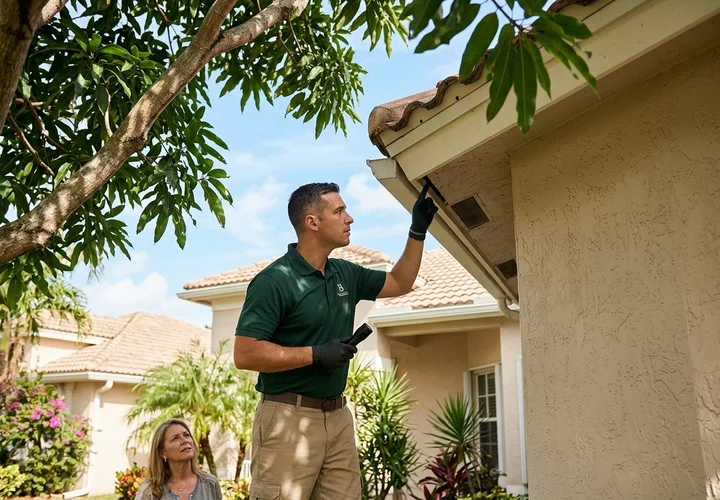
The Bugstinct Pest Management Process
A structured four-phase approach that addresses the root causes of infestation, not just the visible symptoms.
Inspection and Identification
Every pest management plan starts with a thorough property inspection. We identify current pest species, severity, entry points, harborage zones, moisture sources, and environmental conditions contributing to pest pressure. Correct identification determines the correct protocol.
Prevention and Exclusion Recommendations
Before applying any product, we identify and document conditions that enable pests to enter and survive — unseal gaps, organic debris near the foundation, standing water, and over-irrigated landscaping. Clients receive a written list of recommended corrective actions to reduce the problem at its source.
Targeted Treatment at the Minimum Effective Rate
IPM uses the least invasive, most targeted treatment appropriate for the identified species. This may be non-repellent baits, targeted perimeter spray, IGR application, mechanical exclusion, or a combination. We do not default to blanket application — the species and harborage site determine the method.
Monitoring, Follow-Up, and Plan Adjustment
After initial treatment, we schedule a follow-up to evaluate results and adjust application if needed. Monthly service visits continue the monitoring cycle — checking problem areas, reapplying where pressure rebuilds, and updating the plan as Florida's seasonal pest patterns shift.
Why Broward County Requires a Different Pest Management Strategy
Year-Round Pest Pressure Changes the Math
In most of the United States, pest pressure drops significantly in winter. Broward County does not have that advantage. With average temperatures staying above 60 degrees Fahrenheit year-round and summer humidity regularly exceeding 80%, pest populations never enter a seasonal dormancy cycle. German cockroaches reproduce every 28 to 45 days in these conditions. Florida carpenter ants forage continuously. Mosquito breeding can occur in standing water as small as a bottle cap, and Broward's canal system provides thousands of acres of ideal larval habitat.
This means that a one-time treatment — or even a quarterly spray schedule common in northern states — is insufficient for maintaining a pest-free property in Broward. Monthly management that monitors and responds to shifting conditions is the standard that actually keeps homes and businesses reliably pest-free in South Florida's climate.
The Problem With Reactive Spraying
Most pest control calls are reactive: a customer sees cockroaches, calls for a spray, and the technician applies a contact killer to visible surfaces. The problem is that contact sprays kill the insects you can see — typically 5 to 10% of the total population — while the rest of the colony retreats deeper into harborage or disperses to adjacent areas. Repellent products can actually fragment colonies, making them harder to eliminate.
Integrated pest management inverts this logic. Instead of treating where pests appear, IPM targets where they live, breed, and enter. Non-repellent baits are placed at harborage sites and carried back to the colony by foraging insects, eliminating the source population. Prevention recommendations reduce the conditions that attract pests before they become an infestation. The result is fewer pest issues over time — not just temporary suppression after each visit.
Building Conditions in South Florida
South Florida's construction patterns create specific pest management challenges. Concrete block homes with slab foundations have different entry point profiles than wood-frame homes in the North. Dense tropical landscaping pressed against foundations provides both harborage and moisture. Irrigation systems and the prevalence of outdoor living spaces extend the interface between pest habitat and the home's interior. Bugstinct's Broward County pest management plans account for these regional building and landscaping conditions in every inspection and treatment plan.
- Foundation gaps around utility penetrations are common entry points for ants and roaches
- Roof fascia and soffit gaps allow roof rats and palmetto bugs to access attic spaces
- Mulch beds adjacent to the foundation retain moisture that attracts moisture-loving insects
- Pool decks and exterior lighting attract flying insects that become food sources for spiders and lizards
Integrated Pest Management vs. Traditional Pest Spraying
Understanding what separates a management program from a standard spray visit.
| Comparison | Traditional Spray Visit | IPM-Based Management Plan |
|---|---|---|
| Approach | Reactive — treat after pests appear | Proactive — prevent and monitor before escalation |
| Pest identification | Generic treatment regardless of species | Species-specific protocol matched to biology |
| Product type | Repellent contact sprays | Non-repellent baits and targeted applications |
| Results over time | Repeated flare-ups, repeated spray cycles | Progressively fewer pest issues as root causes are addressed |
| Prevention guidance | None provided | Written corrective action list included |
| Monitoring | No tracking between visits | Monthly check on problem zones and plan adjustment |
Pest Management FAQs — Broward County
What is integrated pest management (IPM) and how is it different from regular pest control?
Is IPM safer for families with children and pets?
How long does it take to see results from a pest management program?
What pests does the Broward County pest management program cover?
Do I need to make changes to my property as part of pest management?
How often does Bugstinct visit for a pest management plan?
What Our Pest Management Program Covers
A complete management solution for every pest threat common to Broward County properties.
Species Identification
Every management visit begins with identification of active species and assessment of infestation severity to ensure the correct protocol is applied.
Prevention Audit
A written corrective action report after each inspection documents entry points, moisture sources, and harborage conditions contributing to pest pressure.
IGR Treatments
Insect growth regulators prevent larvae from maturing into reproductive adults, breaking the reproductive cycle and reducing population pressure over time.
Population Monitoring
Monthly visits track pest pressure at problem zones and adjust application intensity based on observed activity levels, not a fixed schedule.
Exclusion Support
Entry points identified during inspection are sealed or flagged with specific closure recommendations to prevent pest re-entry between treatments.
Decreasing Pest Pressure
Unlike reactive spray cycles, IPM-based monthly management results in progressively fewer pest issues as root causes are corrected over successive visits.
Long-Term Benefits of Professional Pest Management
The compounding value of a structured management plan versus reactive one-time treatments.
Fewer Pest Issues Over Time
Monthly management addresses root causes. Each visit reduces conditions that allow pests to establish, resulting in fewer emergencies and lower long-term cost.
Reduced Pesticide Exposure
Targeted application to the right locations at the minimum effective rate means less total pesticide in and around your home than repeated reactive spray cycles.
Whole-Property Protection
A management plan covers interior and exterior zones, foundation perimeter, points of entry, and seasonal pest pressure — not just where you last saw something.
Ongoing Expert Guidance
Every monthly visit includes a brief conversation about what was found and what to watch for next. You are never left guessing about what is happening in your home.
Written Service Records
Each visit is documented — products used, areas treated, conditions noted, and recommendations made. You have a full record of your property's pest management history.
Adaptive Plan Adjustments
Florida's pest pressure changes by season. Your plan adjusts accordingly — mosquito pressure escalates in summer, rodent activity increases in cooler months, and your service reflects those shifts.
Related Services in Broward County
Start a Pest Management Plan That Actually Works.
Move beyond the spray-and-wait cycle. Book a free Broward County inspection and start a management program built around your property, your pest pressure, and long-term results.